
Showing posts with label Traditional. Show all posts
Showing posts with label Traditional. Show all posts
Saturday, 9 February 2013
 Tajik traditional folk dancing, Wakhan Valley, Tajikistan
 16:05 |
  Posted by
Unknown
Posted by
Unknown
Tajik traditional folk dancing, Wakhan Valley, Tajikistan Tube. Duration : 1.72 Mins.
Driving along the Afghan border in Tajikistan with Peregrine Adventures, we came across a Wakhan Valley village staging a music, singing and dancing show. The dancers were from the capital Dushanbe and were there to celebrate and warm up the village for the imminent arrival of the Tajikistan President. He arrived the next day. There was an official cameraman there -perhaps the footage would be spliced in with the presidential visit for Tajik state TV. The whole village was present, all the women and children looking from one side and from atop a wall along the roadway before the 'stage', the men to the other side. Locals got up and danced alongside the performers occasionally too. I doubt this kind of dancing is still allowed across the river in Afghanistan, where a large population of ethnic Tajiks live.
Driving along the Afghan border in Tajikistan with Peregrine Adventures, we came across a Wakhan Valley village staging a music, singing and dancing show. The dancers were from the capital Dushanbe and were there to celebrate and warm up the village for the imminent arrival of the Tajikistan President. He arrived the next day. There was an official cameraman there -perhaps the footage would be spliced in with the presidential visit for Tajik state TV. The whole village was present, all the women and children looking from one side and from atop a wall along the roadway before the 'stage', the men to the other side. Locals got up and danced alongside the performers occasionally too. I doubt this kind of dancing is still allowed across the river in Afghanistan, where a large population of ethnic Tajiks live.
Tajik traditional dancers, Wakhan Valley, Tajikistan
12:29 |
Posted by
Unknown
Tajik traditional dancers, Wakhan Valley, Tajikistan Video Clips. Duration : 1.73 Mins.
Driving along the Afghan border in Tajikistan with Peregrine Adventures, we came across a Wakhan Valley village staging a music, singing and dancing show. The dancers were from the capital Dushanbe and were there to celebrate and warm up the village for the imminent arrival of the Tajikistan President. He arrived the next day. There was an official cameraman there -perhaps the footage would be spliced in with the presidential visit for Tajik state TV. The whole village was present, all the women and children looking from one side and from atop a wall along the roadway before the 'stage', the men to the other side. Locals got up and danced alongside the performers occasionally too. I doubt this kind of dancing is still allowed across the river in Afghanistan, where a large population of ethnic Tajiks live.
Driving along the Afghan border in Tajikistan with Peregrine Adventures, we came across a Wakhan Valley village staging a music, singing and dancing show. The dancers were from the capital Dushanbe and were there to celebrate and warm up the village for the imminent arrival of the Tajikistan President. He arrived the next day. There was an official cameraman there -perhaps the footage would be spliced in with the presidential visit for Tajik state TV. The whole village was present, all the women and children looking from one side and from atop a wall along the roadway before the 'stage', the men to the other side. Locals got up and danced alongside the performers occasionally too. I doubt this kind of dancing is still allowed across the river in Afghanistan, where a large population of ethnic Tajiks live.
Friday, 8 February 2013
Mongol Biyelgee: Mongolian traditional folk dance
14:41 |
Posted by
Unknown
Mongol Biyelgee: Mongolian traditional folk dance Tube. Duration : 10.03 Mins.
UNESCO: Urgent Safeguarding List of the Intangible Cultural Heritage of Humanity - 2009 URL: www.unesco.org Description: The Mongol Biyelgee Mongolian Traditional Folk Dance is performed by dancers from different ethnic groups in the Khovd and Uvs provinces of Mongolia. Regarded as the original forebear of Mongolian national dances, Biyelgee dances embody and originate from the nomadic way of life. Biyelgee dances are typically confined to the small space inside the ger (nomadic dwelling) and are performed while half sitting or cross-legged. Hand, shoulder and leg movements express aspects of Mongol lifestyle including household labour, customs and traditions, as well as spiritual characteristics tied to different ethnic groups. Biyelgee dancers wear clothing and accessories featuring colour combinations, artistic patterns, embroidery, knitting, quilting and leather techniques, and gold and silver jewellery specific to their ethnic group and community. The dances play a significant role in family and community events such as feasts, celebrations, weddings and labour-related practices, simultaneously expressing distinct ethnic identities and promoting family unity and mutual understanding among different Mongolian ethnic groups. Traditionally, Mongol Biyelgee is transmitted to younger generations through apprenticeships or home-tutoring within the family, clan or neighbourhood. Today, the majority of transmitters of Biyelgee dance are elderly, and their numbers are ...
UNESCO: Urgent Safeguarding List of the Intangible Cultural Heritage of Humanity - 2009 URL: www.unesco.org Description: The Mongol Biyelgee Mongolian Traditional Folk Dance is performed by dancers from different ethnic groups in the Khovd and Uvs provinces of Mongolia. Regarded as the original forebear of Mongolian national dances, Biyelgee dances embody and originate from the nomadic way of life. Biyelgee dances are typically confined to the small space inside the ger (nomadic dwelling) and are performed while half sitting or cross-legged. Hand, shoulder and leg movements express aspects of Mongol lifestyle including household labour, customs and traditions, as well as spiritual characteristics tied to different ethnic groups. Biyelgee dancers wear clothing and accessories featuring colour combinations, artistic patterns, embroidery, knitting, quilting and leather techniques, and gold and silver jewellery specific to their ethnic group and community. The dances play a significant role in family and community events such as feasts, celebrations, weddings and labour-related practices, simultaneously expressing distinct ethnic identities and promoting family unity and mutual understanding among different Mongolian ethnic groups. Traditionally, Mongol Biyelgee is transmitted to younger generations through apprenticeships or home-tutoring within the family, clan or neighbourhood. Today, the majority of transmitters of Biyelgee dance are elderly, and their numbers are ...
Thursday, 7 February 2013
Traditional clothes of the East Slavs
20:07 |
Posted by
Unknown
Traditional clothes of the East Slavs Video Clips. Duration : 9.05 Mins.
The East Slavs are a Slavic ethnic group, the speakers of East Slavic languages. Formerly the main population of the medieval state of Kievan Rus, by the seventeenth century they evolved into the Russian, Ukrainian and Belarusian people. Modern East Slavic people and ethnic groups include: 1) RUSSIANS -Pomors -Lipovan Russians -Cossacks 2)UKRAINIANS -Bojko -Hutsuls -Lemkos -Poleszuks 3) BELARUSSIANS -Poleszuks 4)RUSYNS -Lemkos
The East Slavs are a Slavic ethnic group, the speakers of East Slavic languages. Formerly the main population of the medieval state of Kievan Rus, by the seventeenth century they evolved into the Russian, Ukrainian and Belarusian people. Modern East Slavic people and ethnic groups include: 1) RUSSIANS -Pomors -Lipovan Russians -Cossacks 2)UKRAINIANS -Bojko -Hutsuls -Lemkos -Poleszuks 3) BELARUSSIANS -Poleszuks 4)RUSYNS -Lemkos
Classic Recipes of Poland: The Best Traditional Food and Cooking in 25 Authentic Regional Dishes
06:25 |
Posted by
Unknown
In my heart. Toward the purchase of
I want everyone to be happy with my purchase of the site.
I do not know what everyone was happy.
But I just want a small smile. To all visitors on the web.
 |
Classic Recipes of Poland: The Best Traditional Food and Cooking in 25 Authentic Regional Dishes |
$7.99
|
Classic Recipes of Poland: The Best Traditional Food and Cooking in 25 Authentic Regional Dishes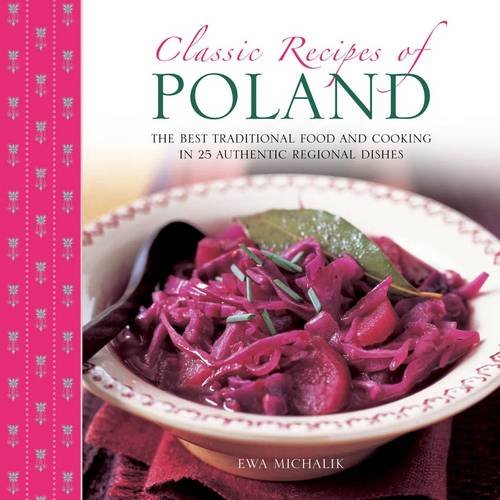
 Classic Recipes of Poland: The Best Traditional Food and Cooking in 25 Authentic Regional Dishes
 Overviews
|
Do you buy the product ....
People buy the item below.
Products are as follows.
Click on the image to select the product in stock. Models and colors.
Click on the image to see the price inside.
and see the details inside in image
Can not find the product you want.
Using the scanner or click on the image to the many other products
Product Description Click the product image.
Thank you for using our services and property purchased with us.
CERTAIN CONTENT THAT APPEARS ON THIS SITE COMES FROM AMAZON SERVICES LLC.
THIS CONTENT IS PROVIDED 'AS IS' AND IS SUBJECT TO CHANGE OR REMOVAL AT ANY
TIME.
Wednesday, 6 February 2013
Balla Kouyate & World Vision: Traditional Malian Music from Massachusetts
02:47 |
Posted by
Unknown
Balla Kouyate & World Vision: Traditional Malian Music from Massachusetts Tube. Duration : 68.27 Mins.
Balla Kouyate is a griot and virtuoso player of the balaphon. Considered the predecessor of the xylophone and the first Mande instrument, the balafon is made up of wood slats of varying lengths. The slats are secured over two rows of calabash gourds, which serve as natural amplifiers. Each gourd is punctured with small holes over which Balla places thin plastic tape. The vibrating air rattles the plastic to create the desired sound. Were he back home in Mali, Balla would use spider webs (collected from kitchen walls) to cover the holes. The first known balafon dates back to the 13th century and remains under the guardianship of the Kouyate family. It is considered a UNESCO-protected Masterpiece of the Oral and Intangible Heritage of Humanity. Once a year it is brought out and played during a ceremony. In this concert Kouyate performs with singer Adjaratou "Tapani" Demba, Sekou "Pablo" Dembele, Makane Kouyate, Idrissa Kone, Daniel Day, and Raja Kassis. Speaker Biography: To say that Kouyate was born into a musical family is an understatement. His family lineage goes back over 800 years to Balla Faseke, the first of an unbroken line of djelis, or griots, in the Kouyate clan. The members of this family are regarded as the original praise-singers of the Malinke people, one of the ethnic groups found across much of West Africa. Djelis are the oral historians, musicians and performers who keep alive and celebrate the history of the Mande people of Mali, Guinea and other West ...
Balla Kouyate is a griot and virtuoso player of the balaphon. Considered the predecessor of the xylophone and the first Mande instrument, the balafon is made up of wood slats of varying lengths. The slats are secured over two rows of calabash gourds, which serve as natural amplifiers. Each gourd is punctured with small holes over which Balla places thin plastic tape. The vibrating air rattles the plastic to create the desired sound. Were he back home in Mali, Balla would use spider webs (collected from kitchen walls) to cover the holes. The first known balafon dates back to the 13th century and remains under the guardianship of the Kouyate family. It is considered a UNESCO-protected Masterpiece of the Oral and Intangible Heritage of Humanity. Once a year it is brought out and played during a ceremony. In this concert Kouyate performs with singer Adjaratou "Tapani" Demba, Sekou "Pablo" Dembele, Makane Kouyate, Idrissa Kone, Daniel Day, and Raja Kassis. Speaker Biography: To say that Kouyate was born into a musical family is an understatement. His family lineage goes back over 800 years to Balla Faseke, the first of an unbroken line of djelis, or griots, in the Kouyate clan. The members of this family are regarded as the original praise-singers of the Malinke people, one of the ethnic groups found across much of West Africa. Djelis are the oral historians, musicians and performers who keep alive and celebrate the history of the Mande people of Mali, Guinea and other West ...
Tuesday, 8 January 2013
TRADITIONAL SLAVIC BEAUTY
12:04 |
Posted by
Unknown
TRADITIONAL SLAVIC BEAUTY Tube. Duration : 4.20 Mins.
Slavic ethnic looks - traditional clothing, dress, folklore.... Dedicated to all beautiful Slavic women! ;)
Slavic ethnic looks - traditional clothing, dress, folklore.... Dedicated to all beautiful Slavic women! ;)
Sunday, 6 January 2013
MIMOUNA | Colorful Traditional | North African Jewish Celebration |
00:18 |
Posted by
Unknown
MIMOUNA | Colorful Traditional | North African Jewish Celebration | Tube. Duration : 24.97 Mins.
Celebrating MIMOUNA, Hosted by Zaavah & Kobi Atias. The mimona is a colorful traditional North African Jewish celebration held the day after Passover. It marks the start of spring and the return to eating chametz, ie, leavened bread and bread by-products, which are forbidden throughout the week of Passover. Some believe the source of the name is Maimon, the father of the Rambam, Rabbi Moshe Ben Maimon, and the Mimouna marks the date of his birth or death. resent research by Yigal Bin-Nun , provide another point of view - relic to a paganism ritual to ladyluck Mimouna is also the name for the seasonal change and its festival in tribal languages in northern Mali and Mauritania from which the custom may also have originated. In Israel, the Mimouna has become a popular annual happening featuring outdoor parties, picnics and BBQs. After settling in Israel, Jewish immigrants from North Africa (Maghrebim) celebrated the Mimouna with their families. In 1966, it was introduced as a national holiday, and has been adopted by other ethnic groups, mainly in the Mizrahi sector. The celebration begins after nightfall on the last day of Passover. Moroccan and Algerian Jews throw open their homes to visitors, after setting out a lavish spread of traditional holiday cakes and sweetmeats. One of the holiday favorites is Mofletta. The table is also laid with various symbols of luck and fertility, with an emphasis on the number "5," such as 5 pieces of gold jewelry or 5 beans arranged on a ...
Celebrating MIMOUNA, Hosted by Zaavah & Kobi Atias. The mimona is a colorful traditional North African Jewish celebration held the day after Passover. It marks the start of spring and the return to eating chametz, ie, leavened bread and bread by-products, which are forbidden throughout the week of Passover. Some believe the source of the name is Maimon, the father of the Rambam, Rabbi Moshe Ben Maimon, and the Mimouna marks the date of his birth or death. resent research by Yigal Bin-Nun , provide another point of view - relic to a paganism ritual to ladyluck Mimouna is also the name for the seasonal change and its festival in tribal languages in northern Mali and Mauritania from which the custom may also have originated. In Israel, the Mimouna has become a popular annual happening featuring outdoor parties, picnics and BBQs. After settling in Israel, Jewish immigrants from North Africa (Maghrebim) celebrated the Mimouna with their families. In 1966, it was introduced as a national holiday, and has been adopted by other ethnic groups, mainly in the Mizrahi sector. The celebration begins after nightfall on the last day of Passover. Moroccan and Algerian Jews throw open their homes to visitors, after setting out a lavish spread of traditional holiday cakes and sweetmeats. One of the holiday favorites is Mofletta. The table is also laid with various symbols of luck and fertility, with an emphasis on the number "5," such as 5 pieces of gold jewelry or 5 beans arranged on a ...
 Labels:
African,
celebration,
Colorful,
episode,
Jewish,
Kadhal,
MIMOUNA,
Pagadai,
Traditional
|
Labels:
African,
celebration,
Colorful,
episode,
Jewish,
Kadhal,
MIMOUNA,
Pagadai,
Traditional
|
 0
comments
0
comments
Saturday, 5 January 2013
Polish traditional folk dance 2: Krakowiak - national dance
03:00 |
Posted by
Unknown
Polish traditional folk dance 2: Krakowiak - national dance Tube. Duration : 3.88 Mins.
Polish traditional folk dance by Folk Esemble 'Lublin', from Lublin, Polonia. Recorded in Ourense, Galicia, Spain on 03/05/2009. www.zpit.lublin.pl Danza folclórica tradicional polaca. Grupo 'Lublin', de Lublin, Polonia. Gravado o 03/05/2009 en Ourense no IV Festival Internacional de Folclore 'Queixumes dos Pinos'.
Polish traditional folk dance by Folk Esemble 'Lublin', from Lublin, Polonia. Recorded in Ourense, Galicia, Spain on 03/05/2009. www.zpit.lublin.pl Danza folclórica tradicional polaca. Grupo 'Lublin', de Lublin, Polonia. Gravado o 03/05/2009 en Ourense no IV Festival Internacional de Folclore 'Queixumes dos Pinos'.
Labels:
Holloway,
Krakowiak,
McClure,
Michael,
national,
Poetry,
POLISH,
Series,
Traditional
|
0
comments
Wednesday, 26 December 2012
San Juanitos music / El Sikuri traditional
10:46 |
Posted by
Unknown
San Juanitos music / El Sikuri traditional Video Clips. Duration : 3.45 Mins.
Characteristic rhytms the national of Ecuador. Of pre-columbian origin with teh cheer sound and melancholic melody, also defined according to the musicologists like unique combination thet denoted the feelind of the Ecuadorian native. San Juanito interpreted music with a combination of native instrument of Ecuador like; the rondador, pingullo, quenillas, mandolin, dulzainas, flutes, churos and also in ocarinas, horns and songs. Added to the previous are "foreign" instruments like: the guitar, quena, big drums, zampoñas etc. even electronic instruments giving him a touch of modernity and stylisation. For the native, to dance San Juanito it express a comumunitarian message of unit in the reciprocity, feeling, indentity and relation of balance with the mother earth ( Pacha Mama )
Characteristic rhytms the national of Ecuador. Of pre-columbian origin with teh cheer sound and melancholic melody, also defined according to the musicologists like unique combination thet denoted the feelind of the Ecuadorian native. San Juanito interpreted music with a combination of native instrument of Ecuador like; the rondador, pingullo, quenillas, mandolin, dulzainas, flutes, churos and also in ocarinas, horns and songs. Added to the previous are "foreign" instruments like: the guitar, quena, big drums, zampoñas etc. even electronic instruments giving him a touch of modernity and stylisation. For the native, to dance San Juanito it express a comumunitarian message of unit in the reciprocity, feeling, indentity and relation of balance with the mother earth ( Pacha Mama )
Saturday, 22 December 2012
Malaysia Culture Show and Traditional Dance
06:08 |
Posted by
Unknown
Malaysia Culture Show and Traditional Dance Tube. Duration : 5.22 Mins.
This is one the most exiting attractions in Kuala Lumpur that you should not miss. The 45 minutes show covering folk dance from different ethnic in Malaysia. The culture show started at 300pm at Matic (Malaysia Tourism Center) Jalan Ampang, Kuala Lumpur, only available on Tuesday, Wednesday, Thursday and Saturday, or you can see the show at Saloma Bistro every night comes with buffer dinner. To do the Kuala Lumpur day tours together with this culture show visit www.kualalumpurtravel.net
This is one the most exiting attractions in Kuala Lumpur that you should not miss. The 45 minutes show covering folk dance from different ethnic in Malaysia. The culture show started at 300pm at Matic (Malaysia Tourism Center) Jalan Ampang, Kuala Lumpur, only available on Tuesday, Wednesday, Thursday and Saturday, or you can see the show at Saloma Bistro every night comes with buffer dinner. To do the Kuala Lumpur day tours together with this culture show visit www.kualalumpurtravel.net
Thursday, 20 December 2012
Complete Traditional Recipe Book
00:26 |
Posted by
Unknown
I want everyone to be happy with my purchase of the site.
I do not know what everyone was happy.
But I just want a small smile. To all visitors on the web.
target="_blank">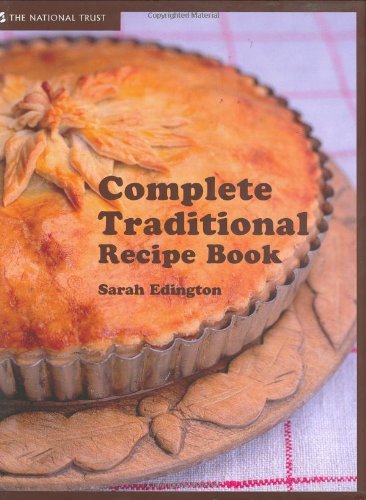

Complete Traditional Recipe Book
Do you buy the product ....
People buy the item below.
Products are as follows.
Click on the image to select the product in stock. Models and colors.
Click on the image to see the price inside.
and see the details inside in image
Can not find the product you want.
Using the scanner or click on the image to the many other products
Product Description Click the product image.
Thank you for using our services and property purchased with us.
Providing a source of the best of traditional British cooking, these recipes range from starters to puddings, featuring Medieval Braised Rabbit with Prunes, treats such as Apple Hat and College Pudding, and delicate desserts like Damson Snow and Marbled Rose Cream. Though the emphasis is on the practical, historical background is also included for some of the key dishes within the book—from the first creamy macaroni cheese (first made in England in the 14th century but then not again until the 18th century when it returned from Italy) to 19th-century mulligatawny soup (derived from Southern India). The National Trust has researched the archives to find an authentic but delicious taste of history. |
 |
|
CERTAIN CONTENT THAT APPEARS ON THIS SITE COMES FROM AMAZON SERVICES LLC. THIS CONTENT IS PROVIDED 'AS IS' AND IS SUBJECT TO CHANGE OR REMOVAL AT ANY TIME.
Subscribe to:
Posts (Atom)