
 National Identity and the Varieties of Capitalism: The Danish Experience (Studies in Nationalism and Ethnic Conflict)
 06:17 |
  Posted by
Unknown
Posted by
Unknown
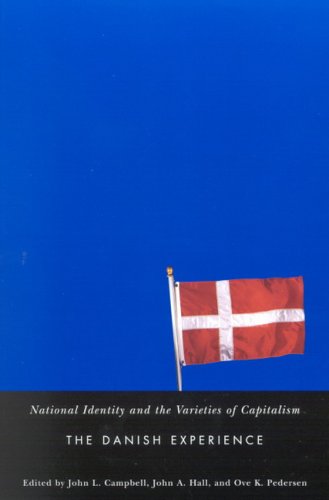

National Identity and the Varieties of Capitalism: The Danish Experience (Studies in Nationalism and Ethnic Conflict)
Do you buy the product ....
People buy the item below.
Products are as follows.
Click on the image to select the product in stock. Models and colors.
Click on the image to see the price inside.
and see the details inside in image
Can not find the product you want.
Using the scanner or click on the image to the many other products
Product Description Click the product image.
Thank you for using our services and property purchased with us.
| Denmark has out-performed most other advanced capitalist countries since the mid-1980s Contributors to National Identity and the Varieties of Capitalism draw from the literature on capitalism and small states and corporatism to explore why this is the case. They find that Danish political and economic institutions facilitate bargaining and consensus building in ways that have enabled the state, businesses, and labour unions to adapt to the challenges of globalization. Moreover, by virtue of its small size, homogeneous population, and response to a variety of international challenges - both economic and geopolitical - Denmark has developed a strong national identity that further bolsters consensus building. The result has been an adaptable and flourishing national political economy. ...Read
more |
 |
|
CERTAIN CONTENT THAT APPEARS ON THIS SITE COMES FROM AMAZON SERVICES LLC. THIS CONTENT IS PROVIDED 'AS IS' AND IS SUBJECT TO CHANGE OR REMOVAL AT ANY TIME.
 Labels:
Capitalism,
Conflict,
Danish,
ethnic,
experience,
Identity,
national,
Nationalism,
Studies,
Varieties
|
Labels:
Capitalism,
Conflict,
Danish,
ethnic,
experience,
Identity,
national,
Nationalism,
Studies,
Varieties
|
 0
comments
0
comments
Nationalism increases in Europe!
23:52 |
Posted by
Unknown
RATE Thumbs UP!!! The Rapidly growing Nationalism is growing ever faster in Europe. Help spread the word and more will come to our ranks! The way to appreciate diversity is to defend unique cultures. Borders must be strengthened, homelands must be respected, and the ideology of multiculturalism must be exposed for the flawed idea that it is. Mass migration from the Third World must end. We have been fed this lie of multi-cultural paradise, that forces us to obedient acceptance of whatever the immigrant think, says and does. This has got us nowhere but to increase the hatred and frustration among common people. Only through proud Nationalism can we truly regain happiness, pride, meaning and a sence of self worth, and by this create true peace. Only white countries are invaded by "multi-culturalism" and only white future generations are effected by this racial mixing. This is White Genocide. Stop this madness or we will die out! Vote for a party that opposes immigration. Spread flyers of Propaganda in your neighburhoods post boxes. Speak to all your friends about how the future will look like if we move Africa and the Arab world into our countries! If we dont hurry they will be to many and gain power throu sheer numbers. Then it will be too late... For all those interested, the song is called "The Unsung War". Track 17 on the Ace Combat 5 soundtrack. This Video was made by: InquisitorNR2
13. Nationalism
22:40 |
Posted by
Unknown
European Civilization, 1648-1945 (HIST 202) In light of the many ethnic and national conflicts of the twentieth century, the dissolution of the Austro-Hungarian Empire in 1918 appears less surprising than the fact that it remained intact for so long. National identity is not an essential characteristic of peoples, and in many cases in Europe it is a relatively recent invention. As such, there are many different characteristics according to which national communities can be defined, or, in Benedict Anderson's phrase, imagined. Along with religion and ethnicity, language has played a particularly important role in shaping the imaginary identification of individuals with abstract communities. No one factor necessarily determines this identification, as evidenced by modern countries such as Belgium and Switzerland that incorporate multiple linguistic and cultural groups in one national community. 00:00 - Chapter 1. The "Imagined Communities" of Nationalism: The Macedonian Example 08:24 - Chapter 2. The Construction of National Identities in the Nineteenth Century: Language and Consciousness 25:45 - Chapter 3. The Development of Nationalism in Eastern Europe: Lithuania and Belarus 37:53 - Chapter 4. Complex Identities: Multiple Languages in Belgium and Switzerland 44:00 - Chapter 5. The Balancing Act of the Austria-Hungarian Empire: Factors of Stability Complete course materials are available at the Open Yale Courses website: open.yale.edu This course was recorded in Fall 2008.
Chechnya: From Nationalism to Jihad (National and Ethnic Conflict in the 21st Century)
04:08 |
Posted by
Unknown
 |
Chechnya: From Nationalism to Jihad (National and Ethnic Conflict in the 21st Century) |
$26.50
|
Chechnya: From Nationalism to Jihad (National and Ethnic Conflict in the 21st Century)
 Chechnya: From Nationalism to Jihad (National and Ethnic Conflict in the 21st Century)
 Overviews The sheer scale and brutality of the hostilities between Russia and Chechnya stand out as an exception in the mostly peaceful breakup of the Soviet Union. Chechnya: From Nationalism to Jihad provides a fascinating analysis of the transformation of secular nationalist resistance in a nominally Islamic society into a struggle that is its antithesis, jihad. Hughes locates Chechen nationalism within the wider movement for national self-determination that followed the collapse of the Soviet empire. When negotiations failed in the early 1990s, political violence was instrumentalized to consolidate opposing nationalist visions of state-building in Russia and Chechnya. The resistance in Chechnya also occurred in a regional context where Russian hegemony over the Caucasus, especially the resources of the Caspian basin, was in retreat, and in an international context of rising Islamic radicalism. Alongside Bosnia, Kashmir, and other conflicts, Chechnya became embedded in Osama Bin Laden's repertoire of jihadist rhetoric against the "West." It was not simply Russia's destruction of a nationalist option for Chechnya, or "Wahabbist" infiltration from without, that created the political space for Islamism. Rather, we must look also at how the conflict was fought. The lack of proportionality and discrimination in the use of violence, particularly by Russia, accelerated and intensified the Islamic radicalization and thereby transformed the nature of the conflict. |
Do you buy the product ....
People buy the item below.
Products are as follows.
Click on the image to select the product in stock. Models and colors.
Click on the image to see the price inside.
and see the details inside in image
Can not find the product you want.
Using the scanner or click on the image to the many other products
Product Description Click the product image.
Thank you for using our services and property purchased with us.
Nationalism and Ethnic Conflict - revised edition (International Security Readers)
10:06 |
Posted by
Unknown
Nationalism and Ethnic Conflict - revised edition (International Security Readers)
Do you buy the product ....
People buy the item below.
Products are as follows.
Click on the image to select the product in stock. Models and colors.
Click on the image to see the price inside.
and see the details inside in image
Can not find the product you want.
Using the scanner or click on the image to the many other products
Product Description Click the product image.
Thank you for using our services and property purchased with us.
Most recent wars have been complex and bloody internal conflicts driven to a significant degree by nationalism and ethnic animosity. Since the end of the Cold War, dozens of wars -- in Bosnia, Kosovo, Rwanda, Somalia, the former Soviet Union, and elsewhere -- have killed or displaced millions of people. Understanding and controlling these wars has become one of the most important and frustrating tasks for scholars and political leaders.This revised and expanded edition of Nationalism and Ethnic Conflict contains essays from some of the world's leading analysts of nationalism, ethnic conflict, and internal war. The essays from the first edition have been updated and supplemented by analyses of recent conflicts and new research on the resolution of ethnic and civil wars.The first part of the book addresses the roots of nationalistic and ethnic wars, focusing in particular on the former Yugoslavia. The second part assesses options for international action, including the use of force and the deployment of peacekeeping troops. The third part examines political challenges that often complicate attempts to prevent or end internal conflicts, including refugee flows and the special difficulties of resolving civil wars. ...Read more |
 |
|
CERTAIN CONTENT THAT APPEARS ON THIS SITE COMES FROM AMAZON SERVICES LLC. THIS CONTENT IS PROVIDED 'AS IS' AND IS SUBJECT TO CHANGE OR REMOVAL AT ANY TIME.
Labels:
Conflict,
Edition,
ethnic,
International,
Nationalism,
Readers,
Revised,
Security
|
0
comments
The Politics of Ethnic Nationalism: Afrikaner Unity, the National Party and the Radical Right in Stellenbosch, 1934-1948 (African Studies)
01:26 |
Posted by
Unknown
 |
The Politics of Ethnic Nationalism: Afrikaner Unity, the National Party and the Radical Right in Stellenbosch, 1934-1948 (African Studies) |
$128.00
|
The Politics of Ethnic Nationalism: Afrikaner Unity, the National Party and the Radical Right in Stellenbosch, 1934-1948 (African Studies)
The Politics of Ethnic Nationalism: Afrikaner Unity, the National Party and the Radical Right in Stellenbosch, 1934-1948 (African Studies)
The Politics of Ethnic Nationalism: Afrikaner Unity, the National Party and the Radical Right in Stellenbosch, 1934-1948 (African Studies) Overviews The Politics of Ethnic Nationalism is the first significant local study of National Party and Afrikaner politics. By focusing on Stellenbosch as a university and a town, the book extends our understanding of the complex interaction between the GNP/HNP and various organizations of the radical right. The book illustrates, at a local level and using detailed materials, how identity was constructed through a process of excluding some (English, Jew, Coloured) and including others. In addition, it examines the ways in which Afrikaner nationalists of all shades of political opinion conceptualized their relationships with English-speaking South Africans and the ways that the rhetoric of republicanism and anti-imperialism were employed by nationalists. The study exposes the complex and Byzantine nature of Afrikaner nationalist politics, revealing the multiplicity of identities and ideologies co-existing within Afrikanerdom, the cross-cutting allegiances and overlapping loyalties. It reveals further the extent to which branches of nationalist organizations were fragmented and to which even individuals could embrace contradictory ideologies. |
Do you buy the product ....
People buy the item below.
Products are as follows.
Click on the image to select the product in stock. Models and colors.
Click on the image to see the price inside.
and see the details inside in image
Can not find the product you want.
Using the scanner or click on the image to the many other products
Product Description Click the product image.
Thank you for using our services and property purchased with us.
Labels:
19341948,
African,
Afrikaner,
ethnic,
History,
Monteverdi,
national,
Nationalism,
Politics,
Radical,
Stellenbosch,
Studies,
Unity
|
0
comments
Ethnic Nationalism in Korea: Genealogy, Politics, And Legacy (Studies of the Walter H. Shorenstein Asia-Pacific Research Center)
00:42 |
Posted by
Unknown
 |
Ethnic Nationalism in Korea: Genealogy, Politics, And Legacy (Studies of the Walter H. Shorenstein Asia-Pacific Research Center) |
$27.95
|
Ethnic Nationalism in Korea: Genealogy, Politics, And Legacy (Studies of the Walter H. Shorenstein Asia-Pacific Research Center)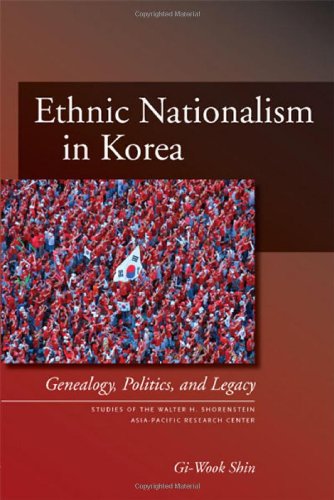
Ethnic Nationalism in Korea: Genealogy, Politics, And Legacy (Studies of the Walter H. Shorenstein Asia-Pacific Research Center)
Ethnic Nationalism in Korea: Genealogy, Politics, And Legacy (Studies of the Walter H. Shorenstein Asia-Pacific Research Center) Overviews This book explains the roots, politics, and legacy of Korean ethnic nationalism, which is based on the sense of a shared bloodline and ancestry. Belief in a racially distinct and ethnically homogeneous nation is widely shared on both sides of the Korean peninsula, although some scholars believe it is a myth with little historical basis. Finding both positions problematic and treating identity formation as a social and historical construct that has crucial behavioral consequences, this book examines how such a blood-based notion has become a dominant source of Korean identity, overriding other forms of identity in the modern era. It also looks at how the politics of national identity have played out in various contexts in Korea: semicolonialism, civil war, authoritarian politics, democratization, territorial division, and globalization. |
Do you buy the product ....
People buy the item below.
Products are as follows.
Click on the image to select the product in stock. Models and colors.
Click on the image to see the price inside.
and see the details inside in image
Can not find the product you want.
Using the scanner or click on the image to the many other products
Product Description Click the product image.
Thank you for using our services and property purchased with us.
Labels:
Artists,
AsiaPacific,
Center,
Essential,
ethnic,
Genealogy,
Korea,
Legacy,
Nationalism,
Politics,
Research,
Series,
Shorenstein,
Studies,
Turner,
Walter
|
0
comments
The National Question: Nationalism, Ethnic Conflict, and Self-Determination in the Twentieth Century
01:36 |
Posted by
Unknown
The National Question: Nationalism, Ethnic Conflict, and Self-Determination in the Twentieth Century
Do you buy the product ....
People buy the item below.
Products are as follows.
Click on the image to select the product in stock. Models and colors.
Click on the image to see the price inside.
and see the details inside in image
Can not find the product you want.
Using the scanner or click on the image to the many other products
Product Description Click the product image.
Thank you for using our services and property purchased with us.
| The class forces that have come to play a central role in directing movements in different socio-political, temporal, and geographic settings are explored in case studies of the political history of nationalist movements in Palestine, Kurdistan, South Africa, Northern Ireland, Puerto Rico, the Basque Country, and Quebec the role of the state in ethnic conflicts in India, China, the former Soviet Union, and the former Yugoslavia the role of women and issues of gender and class in Africa, the Middle East, and Central America. Berch Berberoglu is Professor and Chair, Department of Sociology, and Director of the Institute for International Studies at the University of Nevada, Reno. He has published thirteen books, including "The Political Economy of Development: Development Theory and the Prospects for Change in the Third World" and "Class Structure and Social Transformations". ...Read
more |
 |
|
CERTAIN CONTENT THAT APPEARS ON THIS SITE COMES FROM AMAZON SERVICES LLC. THIS CONTENT IS PROVIDED 'AS IS' AND IS SUBJECT TO CHANGE OR REMOVAL AT ANY TIME.
Labels:
Biblical,
Century,
Conflict,
Criticism,
ethnic,
Guides,
Literary,
national,
Nationalism,
Question,
Scholarship,
SelfDetermination,
Series,
Testament,
Twentieth
|
0
comments