
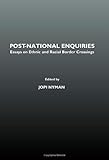
 Post-National Enquiries: Essays on Ethnic and Racial Border Crossings
 05:47 |
  Posted by
Unknown
Posted by
Unknown
 |
[else] [endif] |
 |
|
| The studies collected in this volume address a variety of cultural narratives of diverse border crossings. Through their focus on various historical and contemporary border phenomena in Europe and the United States, the essays show that the border-crossing migrant challenges the view that people belong to one particular nation-state and culture. The essays in the first part of the volume explore of the problematics of 'race' in theoretical and practical border crossings including the theories of sociologist Paul Gilroy, multicultural casting in American theatre, and the fiction of James Baldwin. In the second part, the focus is on encounters with whiteness and problems of constructing ethnic identity in the cinema of Elia Kazan, Jewish American fiction, and Toni Morrison's most recent novel A Mercy (2008). The third part of the volume explores the sites and practices of border by providing case analyses of the Muslim veil in Europe and the Finnish-Russian border. The final part of the volume is devoted to the problematization of borders in the fiction of the South Asian American writer Bharati Mukherjee. ...Read
more |


Post-National Enquiries: Essays on Ethnic and Racial Border Crossings
Do you buy the product ....
People buy the item below.
Products are as follows.
Click on the image to select the product in stock. Models and colors.
Click on the image to see the price inside.
and see the details inside in image
Can not find the product you want.
Using the scanner or click on the image to the many other products
Product Description Click the product image.
Thank you for using our services and property purchased with us.
CERTAIN CONTENT THAT APPEARS ON THIS SITE COMES FROM AMAZON SERVICES LLC. THIS CONTENT IS PROVIDED 'AS IS' AND IS SUBJECT TO CHANGE OR REMOVAL AT ANY TIME.
Gerakan lied to fan racial sentiments
09:50 |
Posted by
Unknown
It was reported that two Gerakan members have said in Sri Aman, Sarawak that the Penang State Government is giving more allocations for schools to the Malays. On the other hand, UMNO have claimed otherwise, ie Penang takes care of the Chinese and not the Malay.
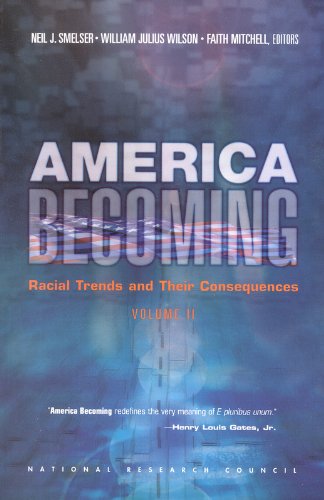
America Becoming: Racial Trends and Their Consequences, Volume 2
12:42 |
Posted by
Unknown
 |
[else] [endif] |
|
|
| The 20th Century has been marked by enormous change in terms of how we define race. In large part, we have thrown out the antiquated notions of the 1800s, giving way to a more realistic, sociocultural view of the world. The United States is, perhaps more than any other industrialized country, distinguished by the size and diversity of its racial and ethnic minority populations. Current trends promise that these features will endure. Fifty years from now, there will most likely be no single majority group in the United States. How will we fare as a nation when race-based issues such as immigration, job opportunities, and affirmative action are already so contentious today? In "America Becoming", leading scholars and commentators explore past and current trends among African Americans, Hispanics, Asian Americans, and Native Americans in the context of a white majority.This volume presents the most up-to-date findings and analysis on racial and social dynamics, with recommendations for ongoing research. It examines compelling issues in the field of race relations, including: race and ethnicity in criminal justice; demographic and social trends for Hispanics, Asian Americans, and Native Americans; trends in minority-owned businesses; wealth, welfare, and racial stratification; residential segregation and the meaning of "neighborhood"; disparities in educational test scores among races and ethnicities; health and development for minority children, adolescents, and adults; race and ethnicity in the labor market, including the role of minorities in America's military; immigration and the dynamics of race and ethnicity; the changing meaning of race; and, changing racial attitudes.This collection of papers, compiled and edited by distinguished leaders in the behavioral and social sciences, represents the most current literature in the field. Volume 1 covers demographic trends, immigration, racial attitudes, and the geography of opportunity. Volume 2 deals with the criminal justice system, the labor market, welfare, and health trends. Both books will be of great interest to educators, scholars, researchers, students, social scientists, and policymakers. ...Read
more |
America Becoming: Racial Trends and Their Consequences, Volume 2
Do you buy the product ....
People buy the item below.
Products are as follows.
Click on the image to select the product in stock. Models and colors.
Click on the image to see the price inside.
and see the details inside in image
Can not find the product you want.
Using the scanner or click on the image to the many other products
Product Description Click the product image.
Thank you for using our services and property purchased with us.
CERTAIN CONTENT THAT APPEARS ON THIS SITE COMES FROM AMAZON SERVICES LLC. THIS CONTENT IS PROVIDED 'AS IS' AND IS SUBJECT TO CHANGE OR REMOVAL AT ANY TIME.
Border Dilemmas: Racial and National Uncertainties in New Mexico, 1848–1912
07:08 |
Posted by
Unknown
 |
Border Dilemmas: Racial and National Uncertainties in New Mexico, 1848–1912 |
$25.95
|
Border Dilemmas: Racial and National Uncertainties in New Mexico, 1848–1912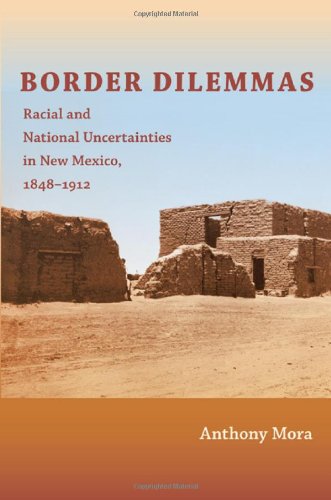
 Border Dilemmas: Racial and National Uncertainties in New Mexico, 1848–1912
 Overviews The U.S.-Mexican War officially ended in 1848 with the signing of the Treaty of Guadalupe Hidalgo, which called for Mexico to surrender more than one-third of its land. The treaty offered Mexicans living in the conquered territory a choice between staying there or returning to Mexico by moving south of the newly drawn borderline. In this fascinating history, Anthony Mora analyzes contrasting responses to the treaty’s provisions. The town of Las Cruces was built north of the border by Mexicans who decided to take their chances in the United States. La Mesilla was established just south of the border by men and women who did not want to live in a country that had waged war against the Mexican republic; nevertheless, it was incorporated into the United States in 1854, when the border was redrawn once again. Mora traces the trajectory of each town from its founding until New Mexico became a U.S. state in 1912. La Mesilla thrived initially, but then fell into decay and was surpassed by Las Cruces as a pro-U.S. regional discourse developed. Border Dilemmas explains how two towns, less than five miles apart, were deeply divided by conflicting ideas about the relations between race and nation, and how these ideas continue to inform discussion about what it means to “be Mexican” in the United States. |
Do you buy the product ....
People buy the item below.
Products are as follows.
Click on the image to select the product in stock. Models and colors.
Click on the image to see the price inside.
and see the details inside in image
Can not find the product you want.
Using the scanner or click on the image to the many other products
Product Description Click the product image.
Thank you for using our services and property purchased with us.
 Labels:
18481912,
Anniversary,
Border,
Celebrate,
Dilemmas,
Illustrators,
Mexico,
national,
Photography,
Racial,
Reading,
Uncertainties,
Youns
|
Labels:
18481912,
Anniversary,
Border,
Celebrate,
Dilemmas,
Illustrators,
Mexico,
national,
Photography,
Racial,
Reading,
Uncertainties,
Youns
|
 0
comments
0
comments
Critical Perspectives on Racial and Ethnic Differences in Health in Late Life
04:34 |
Posted by
Unknown
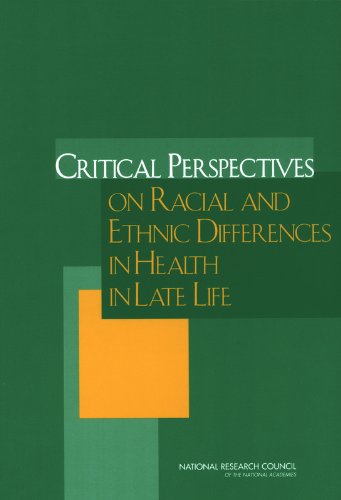

Critical Perspectives on Racial and Ethnic Differences in Health in Late Life
 |
|
|
|
| In their later years, Americans of different racial and ethnic backgrounds are not in equally good--or equally poor--health. There is wide variation, but on average older Whites are healthier than older Blacks and tend to outlive them. But Whites tend to be in poorer health than Hispanics and Asian Americans. This volume documents the differentials and considers possible explanations. Selection processes play a role: selective migration, for instance, or selective survival to advanced ages. Health differentials originate early in life, possibly even before birth, and are affected by events and experiences throughout the life course. Differences in socioeconomic status, risk behavior, social relations, and health care all play a role. Separate chapters consider the contribution of such factors and the biopsychosocial mechanisms that link them to health. This volume provides the empirical evidence for the research agenda provided in the separate report of the Panel on Race, Ethnicity, and Health in Later Life. ...Read more |
Do you buy the product ....
People buy the item below.
Products are as follows.
Click on the image to select the product in stock. Models and colors.
Click on the image to see the price inside.
and see the details inside in image
Can not find the product you want.
Using the scanner or click on the image to the many other products
Product Description Click the product image.
Thank you for using our services and property purchased with us.
Racial and Ethnic Differences in the Health of Older Americans
07:06 |
Posted by
Unknown
 |
[else] [endif] |
|
|
| Older Americans, even the oldest, can now expect to live years longer than those who reached the same ages even a few decades ago. Although survival has improved for all racial and ethnic groups, strong differences persist, both in life expectancy and in the causes of disability and death at older ages. This book examines trends in mortality rates and selected causes of disability (cardiovascular disease, dementia) for older people of different racial and ethnic groups. The determinants of these trends and differences are also investigated, including differences in access to health care and experiences in early life, diet, health behaviors, genetic background, social class, wealth and income. Groups often neglected in analyses of national data, such as the elderly Hispanic and Asian Americans of different origin and immigrant generations, are compared. The volume provides understanding of research bearing on the health status and survival of the fastest-growing segment of the American population. ...Read
more |
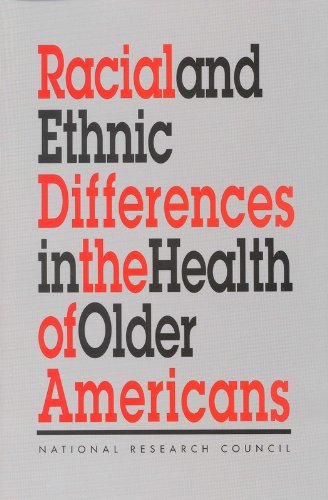
Racial and Ethnic Differences in the Health of Older Americans
Do you buy the product ....
People buy the item below.
Products are as follows.
Click on the image to select the product in stock. Models and colors.
Click on the image to see the price inside.
and see the details inside in image
Can not find the product you want.
Using the scanner or click on the image to the many other products
Product Description Click the product image.
Thank you for using our services and property purchased with us.
CERTAIN CONTENT THAT APPEARS ON THIS SITE COMES FROM AMAZON SERVICES LLC. THIS CONTENT IS PROVIDED 'AS IS' AND IS SUBJECT TO CHANGE OR REMOVAL AT ANY TIME.
Labels:
Americans,
Differences,
ethnic,
Fashion,
Health,
History,
Illustrations,
Language,
Oxford,
Racial,
Sculpture
|
0
comments
Unequal Treatment: Confronting Racial and Ethnic Disparities in Health Care (full printed version)
06:30 |
Posted by
Unknown
 |
Unequal Treatment: Confronting Racial and Ethnic Disparities in Health Care (full printed version) |
$79.95
|
Unequal Treatment: Confronting Racial and Ethnic Disparities in Health Care (full printed version)
Unequal Treatment: Confronting Racial and Ethnic Disparities in Health Care (full printed version)
Unequal Treatment: Confronting Racial and Ethnic Disparities in Health Care (full printed version) Overviews Racial and ethnic disparities in health care are known to reflect access to care and other issues that arise from differing socioeconomic conditions. There is, however, increasing evidence that even after such differences are accounted for, race and ethnicity remain significant predictors of the quality of health care received. In "Unequal Treatment", a panel of experts documents this evidence and explores how persons of color experience the health care environment. The book examines how disparities in treatment may arise in health care systems and looks at aspects of the clinical encounter that may contribute to such disparities. Patients' and providers' attitudes, expectations, and behavior are analyzed. How to intervene? "Unequal Treatment" offers recommendations for improvements in medical care financing, allocation of care, availability of language translation, community-based care, and other arenas. The committee highlights the potential of cross-cultural education to improve provider-patient communication and offers a detailed look at how to integrate cross-cultural learning within the health professions. The book concludes with recommendations for data collection and research initiatives. "Unequal Treatment" will be vitally important to health care policymakers, administrators, providers, educators, and students as well as advocates for people of color. |
Do you buy the product ....
People buy the item below.
Products are as follows.
Click on the image to select the product in stock. Models and colors.
Click on the image to see the price inside.
and see the details inside in image
Can not find the product you want.
Using the scanner or click on the image to the many other products
Product Description Click the product image.
Thank you for using our services and property purchased with us.
Labels:
Confronting,
Disparities,
ethnic,
Health,
Inside,
Landscape,
Painting,
printed,
Racial,
Treatment,
Unequal,
version
|
0
comments
The Colors of Poverty: Why Racial and Ethnic Disparities Exist (National Poverty Center Series on Poverty and Public Policy)
05:46 |
Posted by
Unknown
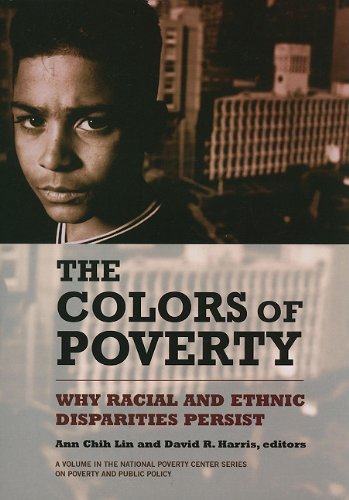
The Colors of Poverty: Why Racial and Ethnic Disparities Exist (National Poverty Center Series on Poverty and Public Policy)
Do you buy the product ....
People buy the item below.
Products are as follows.
Click on the image to select the product in stock. Models and colors.
Click on the image to see the price inside.
and see the details inside in image
Can not find the product you want.
Using the scanner or click on the image to the many other products
Product Description Click the product image.
Thank you for using our services and property purchased with us.
| Given the increasing diversity of the nation--particularly with respect to its growing Hispanic and Asian populations--why does racial and ethnic difference so often lead to disadvantage? In The Colors of Poverty, a multidisciplinary group of experts provides a breakthrough analysis of the complex mechanisms that connect poverty and race. The Colors of Poverty reframes the debate over the causes of minority poverty by emphasizing the cumulative effects of disadvantage in perpetuating poverty across generations. The contributors consider a kaleidoscope of factors that contribute to widening racial gaps, including education, racial discrimination, social capital, immigration, and incarceration. Michèle Lamont and Mario Small grapple with the theoretical ambiguities of existing cultural explanations for poverty disparities. They argue that culture and structure are not competing explanations for poverty, but rather collaborate to produce disparities. Looking at how attitudes and beliefs exacerbate racial stratification, social psychologist Heather Bullock links the rise of inequality in the United States to an increase in public tolerance for disparity. She suggests that the American ethos of rugged individualism and meritocracy erodes support for antipoverty programs and reinforces the belief that people are responsible for their own poverty. Sociologists Darren Wheelock and Christopher Uggen focus on the collateral consequences of incarceration in exacerbating racial disparities and are the first to propose a link between legislation that blocks former drug felons from obtaining federal aid for higher education and the black/white educational attainment gap. Joe Soss and Sanford Schram argue that the increasingly decentralized and discretionary nature of state welfare programs allows for different treatment of racial groups, even when such policies are touted as "race-neutral." They find that states with more blacks and Hispanics on welfare rolls are consistently more likely to impose lifetime limits, caps on benefits for mothers with children, and stricter sanctions. The Colors of Poverty is a comprehensive and evocative introduction to the dynamics of race and inequality. The research in this landmark volume moves scholarship on inequality beyond a simple black-white paradigm, beyond the search for a single cause of poverty, and beyond the promise of one "magic bullet" solution. ANN CHIH LIN is associate professor in the Gerald R. Ford School of Public Policy and Department of Political Science at the University of Michigan. DAVID R. HARRIS is professor of sociology and deputy provost at Cornell University. A Volume in the National Poverty Center Series on Poverty and Public Policy |
 |
|
CERTAIN CONTENT THAT APPEARS ON THIS SITE COMES FROM AMAZON SERVICES LLC. THIS CONTENT IS PROVIDED 'AS IS' AND IS SUBJECT TO CHANGE OR REMOVAL AT ANY TIME.
Labels:
Center,
Colors,
Disparities,
ethnic,
Management,
national,
Palgrave,
Policy,
Poverty,
Public,
Racial,
Series,
Skills
|
0
comments