
 Zionist Israel and Apartheid South Africa: Civil society and peace building in ethnic-national states (Routledge Studies on the Arab-Israeli Conflict)
 05:07 |
  Posted by
Unknown
Posted by
Unknown
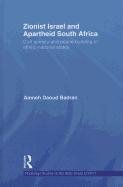

Zionist Israel and Apartheid South Africa: Civil society and peace building in ethnic-national states (Routledge Studies on the Arab-Israeli Conflict)
 |
|
 |
|
This book is a comparison of two ethnic-national "apartheid" states – South Africa and Israel – which have been in conflict, and how internal dissent has developed. In particular it examines the evolution of effective white protest in South Africa and explores the reasons why comparably powerful movements have not emerged in Israel. The book reveals patterns of behaviour shared by groups in both cases. It argues that although the role played by protest groups in peace-building may be limited, a tipping point, or ‘magic point’, can become as significant as other major factors. It highlights the role played by intermediate variables that affect the pathways of protest groups: such as changes in the international system; the visions and strategies of resistance movements and their degree of success; the economic relationship between the dominant and dominated side; and the legitimacy of the ideology in power (apartheid or Zionism). Although the politics and roles of protest groups in both cases share some similarities, differences remain. Whilst white protest groups moved towards an inclusive peace agenda that adopts the ANC vision of a united non-racial democratic South Africa, the Jewish Israeli protest groups are still, by majority, entrenched in their support for an exclusive Jewish state. And as such, they support separation between the two peoples and a limited division of mandatory Palestine / ‘Eretz Israel’. This timely book sheds light on a controversial and explosive political issue: Israel being compared to apartheid South Africa. ...Read more |
Do you buy the product ....
People buy the item below.
Products are as follows.
Click on the image to select the product in stock. Models and colors.
Click on the image to see the price inside.
and see the details inside in image
Can not find the product you want.
Using the scanner or click on the image to the many other products
Product Description Click the product image.
Thank you for using our services and property purchased with us.
 Labels:
Africa,
Apartheid,
ArabIsraeli,
building,
Conflict,
ethnicnational,
Israel,
Routledge,
Society,
States,
Studies,
Zionist
|
Labels:
Africa,
Apartheid,
ArabIsraeli,
building,
Conflict,
ethnicnational,
Israel,
Routledge,
Society,
States,
Studies,
Zionist
|
 0
comments
0
comments
MSU-IIT Octava Choral Society - Mamayug Akun (CCP)
11:42 |
Posted by
Unknown
Adapted and arranged by : Dr. Helen Tejero, Ph.D edited by : Prof. Frank A. Englis Recorded during the 1st CCP National Choral Competition (August 21, 2009), Cultural Center of the Philippines, Pasay City. (Folk Song Category - GOLD) Pianist - Ben Joseph Cuyacot Drum - Jaro Alguso Conductor - Prof. Frank Englis The Musical Director: Francisco "Frank" Abellana Englis is a professor teaching at MSU-IIT since 1974. He is a graduate of Bachelor of Music, major in choral conducting from Silliman University and MA in Ethnomusicology from Kent State University, Kent, Ohio, USA through a scholarship grant from the Rotary International Foundation and the United Board for Christian Higher Education in Asia. His MA thesis is on the Music of the Higa-unon of Rogongon, Iligan City. While at Kent, he was made director of the school's kulintang (gong-chime) ensemble. As member of a three-man music ensemble called ILIAN, which specializes in Philippine music, Frank toured and performed in several American states and six Asian countries in 1984. He has also given several lectures and workshops on Philippine indigenous music around the country and in Bali, Indonesia. He has had two recordings as music director and arranger: the NSC Rondalla 's "Music on Steel," and the Mindanao-wide Women Song Festival's "Kababaihan. Most of his ethnic-inspired choral compositions and arrangements have been included in the repertoires of top national choirs. One of his outstanding works, "Goani, won for ...
Project Bhutan: Bhutanese Society - Part 4 of 4.
05:42 |
Posted by
Unknown
The Final Part of Project Bhutan is about the Bhutanese Society. On this video Tomás Vera Ziccardi explains the more important societal characteristics of Bhutan. The author starts explaining the actual population of the Kingdom and how it's the distribution. He gives official data about population and other importants aspects. During great part of the work the different ethnic groups of Bhutan are analized. Here is where Tomás Vera Ziccardi talks about the Drukpas, and where he especifically talks about the Sharchops, the Ngalops and the Lhotsampas. He also describes the most important characteristics of each ethnic group. The bhutanese government has been having a main policy for preserving the national culture, restricting contact with visitors and the outside influence. Despite the moderization the country is experiencing on the last decades, the great majority of the population keeps on living on the rural areas. At the end of the analize the author gives official statistics and data that will help you to know more about Bhutan. On the same hand he develops each index and numerical statistics about the Kingdom. Finally you will find a personal conclusion that can help you to sumerize everything that has been explained during Project Bhutan. We hope it was useful for all of you and we shall see you on the next project of the TVZC. If you wish to contac us please visit the following official sites of the TVZC: tomasveraziccardi.blogspot.com or http Thank you very much ...