
 FAILED ASSASINATION ON LIVE TV Ahmed Dogan (National Palace of Culture in Sofia) Live TV
 05:45 |
  Posted by
Unknown
Posted by
Unknown
Failed assassination on Ahmed Dogan (National Palace of Culture in Sofia) Live TV Failed assassination on Ahmed Dogan (National Palace of Culture in Sofia) Live TV Failed assassination on Ahmed Dogan (National Palace of Culture in Sofia) Live TV Failed assassination on Ahmed Dogan (National Palace of Culture in Sofia) Live TV Failed assassination on Ahmed Dogan (National Palace of Culture in Sofia) Live TV Failed assassination on Ahmed Dogan (National Palace of Culture in Sofia) Live TV Failed assassination on Ahmed Dogan (National Palace of Culture in Sofia) Live TV Failed assassination on Ahmed Dogan (National Palace of Culture in Sofia) Live TV Ahmed Dogan Assassination Attempt. INCREDIBLE VIDEO - Bulgaria Failed assassination on Ahmed Dogan (National Palace of Culture in Sofia) Live TV SOFIA, Bulgaria — Police in Bulgaria detained a man after he pointed a gun at an ethnic Turkish party leader as he was delivering a speech in the capital. No shots were fired. Failed murder attempt on Ahmed Dogan Bulgarian Opposition Leader Assassination Attempt on Bulgarian Opposition Leader Ahmed Dogan 18+ 100 Likes ??? Please Make Sure you Like And Subscribe This Video за убийство на български опозиционен лидер Ахмед Доган Plays: 10424 (Embed: 0) The leader of Bulgaria's opposition Movement for Rights and Freedoms, Ahmet Dogan, escaped an apparent assassination attempt Saturday while addressing a party congress in Sofia, local media reported. The attacker pointed a gun at Dogan, but ...
Children's Fiction about 9/11: Ethnic, National and Heroic Identities (Children's Literature and Culture)
05:09 |
Posted by
Unknown
 |
Children's Fiction about 9/11: Ethnic, National and Heroic Identities (Children's Literature and Culture) |
$142.00
|
Children's Fiction about 9/11: Ethnic, National and Heroic Identities (Children's Literature and Culture)
 Children's Fiction about 9/11: Ethnic, National and Heroic Identities (Children's Literature and Culture)
 Overviews In this pioneering and timely book, Lampert examines the ways in which cultural identities are constructed within young adult and children’s literature about the attacks of September 11, 2001. Looking at examples including picture books, young adult novels, and a selection of DC Comics, Lampert finds the co-mingling of xenophobia and tolerance, the binaried competition between good and evil and global harmony and national insularity, and the glorification of both the commonplace hero and the super-human. Specifically, Lampert identifies three significant identity categories encoded in 9/11 books for children--ethnic identities, national identities, and heroic identities--arguing that their formation is contingent upon post-9/11 politics. These shifting identities offer implicit and explicit accounts of what constitute good citizenship, loyalty to nation and community, and desirable attributes in a Western post-9/11 context. Lampert makes an original contribution to the field of children’s literature by providing a focused and sustained analysis of how texts for children about 9/11 contribute to formations of identity in these complex times of cultural unease and global unrest. |
Do you buy the product ....
People buy the item below.
Products are as follows.
Click on the image to select the product in stock. Models and colors.
Click on the image to see the price inside.
and see the details inside in image
Can not find the product you want.
Using the scanner or click on the image to the many other products
Product Description Click the product image.
Thank you for using our services and property purchased with us.
India - 2009 World Culture Folk Dance Competition
18:44 |
Posted by
Unknown
Division: Youth Group Team Name: 'PRANITI KUDRE' Dance: UDE GA AMBE Represent: India From: Jacksonville, FL, USA
CULTURE 1 : MALI: dansa by Dramane Diabate on dundun, Bamako, Mali
13:04 |
Posted by
Unknown
Baptism party organised by Karim Tounkara, djembe player from Le Ballet National du Mali. Place: Karim`s backyard, Bamako, Mali. Rhythm(dance)performed: Dansa (diansa) is a beautiful rhythm and dance with origins in Kayes region of Mali. Traditionally played by griots from Khassonke ethnic group on khassonka (jeli) dundun and tamani. The typical orchestra consists of 2 dundun players and tamani players, while djembe is a modern addition. Lead dundunfola plays solo following the movements of the dancer and gives calls for other musicians. Dansa is one of the most beautiful and graceful dances I have ever seen. Here you have an excellent dundun fola, one of the greatest authorities in Bamako, Dramane Diabate. You can reach Dramane and Karim in Ballet National du Mali rehearsing in Palais de la Culture in Bamako. Jeśli chcesz wiedzieć więcej o muzyce Afryki Zachodniej, czytaj na: www.strefarytmu.pl
afghanistan culture 22.10.2010
11:40 |
Posted by
Unknown
The culture of Afghanistan reflects its ancient roots and position as a crossroads for invading ethnic groups and traditions. Little the Afghans make is unattractive; even common grain bags to carry produce to market are often embroidered to make them more beautiful. A camel caravan of nomads often looks like a circus parade, with the animals decked out in woven finery. The Islamic traditions of fine calligraphy and graphic arts are evoked in the fine filigreed flourishes that decorate many buildings. Poetry and poets are revered. Although the people of Afghanistan may have been sorely stressed by centuries of warfare and a difficult environment, their arts have prospered nonetheless. Afghanistan which is called the crossroad of Central Asia has a history over 5.000 years but it has been always sacrifice of invasion, war and conflict. Afghanistan Religion is Islam & it has a key role in life of Afghan people, Thoes who are following Islam are called Muslims. Afghanistan Government Is an Islamic Republic Government. Afghanistan People are called Afghans or Afghani. Afghanistan food or Afghan food is a unique South Central Asian food with yummy taste. Afghanistan is known from it's food and hospitality to it's beautiful carpets and handmade products to the world. Food recipes of Afghanistan are easy to make with a unique & authentic flavor. Afghanistan Music are including Pop, Classical, Folk, Ghazal, Instrumental or Tak Nawazi which each one has it's own audiance ...
BEAUTY OF SLAVIC CULTURE
10:34 |
Posted by
Unknown
Celebration of Slavic culture - tribute to Slavs: folklore, beautiful traditional clothing, fantastic embroidery, pictures of Slavic dancers, singers and other folk-art performers in national costumes.. Ethnic Slavs from various regions of Europe and Asia, variety of styles with common Slavic...
CULTURE 3: SENEGAL: Rehearsal of sabar drumming and dance group (M`Baye M`Boup).
19:26 |
Posted by
Unknown
Rehearsal of the percussion group of M`Baye M`Boup in Dakar. Together with ballet dancers, the group was preparing a concert which finally took place in Dakar, Senegal. This rehearsal was one of the most exciting and amazing things I`ve seen in Africa. The powerful playing of sabar orchestra mixed with an extraordinary dance performance. In Senegal and especially in Dakar you can find a lot of different styles of djembe and other percussion drumming. You have traditional djembe drumming performed most often by families of Malian origin, you have traditional sabar drumming performed by Senegalese people from Wolof and other ethnic groups, you have Seourouba and Bougarabou drumming from Casamance region of Senegal. Finally, you have modern ballet style which mixes all kinds of earlier performances. M`Baye M`Boup is a percussionist playing sabar and djembe as well. You can find him in Dakar by asking in Ballet National of Senegal. Jeśli chcesz wiedzieć więcej o muzyce i tańcu Afryki Zachodniej, czytaj na: www.strefarytmu.pl
Culture Clash: Raised to Play Football (sneak peak) 2011.mov
10:06 |
Posted by
Unknown
www.cultureclashfilm.com Brief Synopsis Culture Clash: Raised to Play Football is a 105 minute cinema verite documentary about the differences and similarities between two ethnic origins in the South Pacific Islands (Samoa and Tonga) and their infiltration into the NFL and its American culture. www.cultureclashfilm.com
Malaysia Culture Show and Traditional Dance
06:08 |
Posted by
Unknown
This is one the most exiting attractions in Kuala Lumpur that you should not miss. The 45 minutes show covering folk dance from different ethnic in Malaysia. The culture show started at 300pm at Matic (Malaysia Tourism Center) Jalan Ampang, Kuala Lumpur, only available on Tuesday, Wednesday, Thursday and Saturday, or you can see the show at Saloma Bistro every night comes with buffer dinner. To do the Kuala Lumpur day tours together with this culture show visit www.kualalumpurtravel.net
The Spectacular State: Culture and National Identity in Uzbekistan (Politics, History, and Culture)
11:28 |
Posted by
Unknown
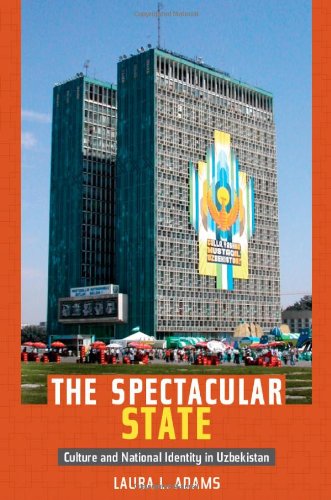

The Spectacular State: Culture and National Identity in Uzbekistan (Politics, History, and Culture)
Do you buy the product ....
People buy the item below.
Products are as follows.
Click on the image to select the product in stock. Models and colors.
Click on the image to see the price inside.
and see the details inside in image
Can not find the product you want.
Using the scanner or click on the image to the many other products
Product Description Click the product image.
Thank you for using our services and property purchased with us.
Laura L. Adams offers unique insight into nation building in Central Asia during the post-Soviet era through an exploration of Uzbekistan’s production of national culture in the 1990s. As she explains, after independence the Uzbek government maintained a monopoly over ideology, exploiting the remaining Soviet institutional and cultural legacies. The state expressed national identity through tightly controlled mass spectacles, including theatrical and musical performances. Adams focuses on these events, particularly the massive outdoor concerts the government staged on the two biggest national holidays, Navro’z, the spring equinox celebration, and Independence Day. Her analysis of the content, form, and production of these ceremonies shows how Uzbekistan’s cultural and political elites engaged in a highly directed, largely successful program of nation building through culture. ...Read
more Adams draws on her observations and interviews conducted with artists, intellectuals, and bureaucrats involved in the production of Uzbekistan’s national culture. These elites used globalized cultural forms such as Olympics-style spectacle to showcase local, national, and international aspects of official culture. While these state-sponsored extravaganzas were intended to be displays of Uzbekistan’s ethnic and civic national identity, Adams found that cultural renewal in the decade after Uzbekistan’s independence was not so much a rejection of Soviet power as it was a re-appropriation of Soviet methods of control and ideas about culture. The public sphere became more restricted than it had been in Soviet times, even as Soviet-era ideas about ethnic and national identity paved the way for Uzbekistan to join a more open global community. |
 |
|
CERTAIN CONTENT THAT APPEARS ON THIS SITE COMES FROM AMAZON SERVICES LLC. THIS CONTENT IS PROVIDED 'AS IS' AND IS SUBJECT TO CHANGE OR REMOVAL AT ANY TIME.
 Labels:
Culture,
Educational,
History,
Identity,
national,
Organs,
Politics,
Spectacular,
State,
Uzbekistan,
Videos
|
Labels:
Culture,
Educational,
History,
Identity,
national,
Organs,
Politics,
Spectacular,
State,
Uzbekistan,
Videos
|
 0
comments
0
comments
From Dessalines to Duvalier: Race, Colour and National Independence in Haiti
07:19 |
Posted by
Unknown
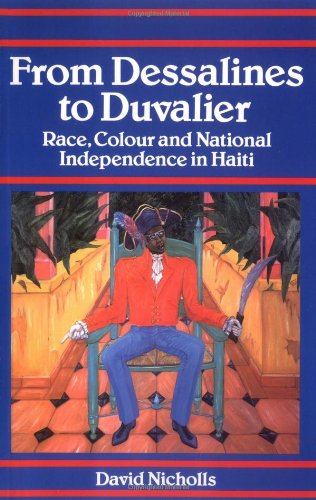
From Dessalines to Duvalier: Race, Colour and National Independence in Haiti
Do you buy the product ....
People buy the item below.
Products are as follows.
Click on the image to select the product in stock. Models and colors.
Click on the image to see the price inside.
and see the details inside in image
Can not find the product you want.
Using the scanner or click on the image to the many other products
Product Description Click the product image.
Thank you for using our services and property purchased with us.
| "Rich in subject matter and eminently readable, this book is also a fine work of scholarship. The more than 1,200 footnotes are models of clarity and relevance; the bibliography and index seem scrupulously accurate. . . While each generation must rewrite its own history, as Nicholls remarks, no book on Haiti for a long time to come will properly be able to ignore the analysis he here provides." --Ethnic and Racial Studies "Step by step, [Nicholls] guides us through the various historical time periods of Haitian political and national development, illuminating each one of them by a cogent and learned discussion of the main ideas and ideologies that accompanied them." --The Political Quarterly "Probably the best book written about Haitian history after its independence . . . a thorough, thoughtful, extremely well-researched work." --Handbook of Latin American Studies In this lively, provocative, and well-documented history, David Nicholls discusses the impact of "color" on political and social alliances during almost two hundred years of Haitian history. While consciousness of racial identity has been a powerful factor which, from the earliest days, has united Haitians in a determination to preserve their national independence, color has been a divisive factor, leading to the erosion of the stability of that independence. Nicholls grounds this sophisticated analysis in great historical detail and engaging, witty prose. Students and general readers alike will gain much from this insightful and informative history of Haiti. A new preface to this edition covers the last ten years in Haitiain history. David Nicholls is a major authority on Haiti, and was in the country as a newspaper correspondent during the 1987 election disaster. His other books include Haiti in the Caribbean Context: Ethnicity; The Pluralist State: and Deity and Domination. ...Read
more |
 |
|
CERTAIN CONTENT THAT APPEARS ON THIS SITE COMES FROM AMAZON SERVICES LLC. THIS CONTENT IS PROVIDED 'AS IS' AND IS SUBJECT TO CHANGE OR REMOVAL AT ANY TIME.
Labels:
19502000,
American,
Century,
Colour,
Culture,
Dessalines,
Duvalier,
Independence,
national
|
0
comments
Revisioning Italy: National Identity and Global Culture
03:38 |
Posted by
Unknown
 |
[else] [endif] |
 |
|
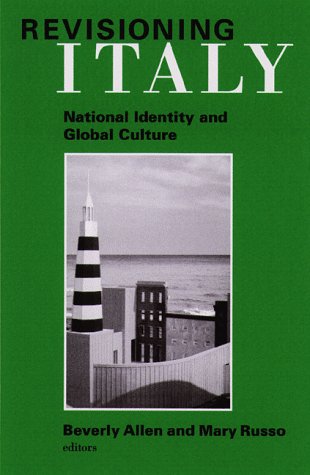
Revisioning Italy: National Identity and Global Culture
Do you buy the product ....
People buy the item below.
Products are as follows.
Click on the image to select the product in stock. Models and colors.
Click on the image to see the price inside.
and see the details inside in image
Can not find the product you want.
Using the scanner or click on the image to the many other products
Product Description Click the product image.
Thank you for using our services and property purchased with us.
CERTAIN CONTENT THAT APPEARS ON THIS SITE COMES FROM AMAZON SERVICES LLC. THIS CONTENT IS PROVIDED 'AS IS' AND IS SUBJECT TO CHANGE OR REMOVAL AT ANY TIME.
Latino/a Popular Culture
00:36 |
Posted by
Unknown
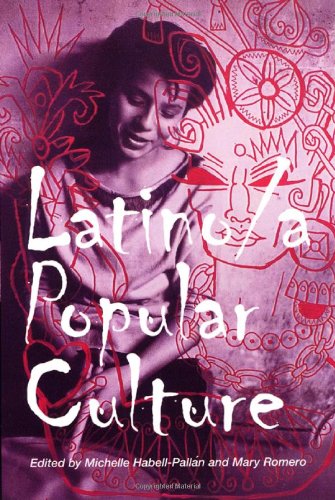

Latino/a Popular Culture
 |
|
|
|
Cover artwork by Diane Gamboa. Credit-Click here Latinos have become the largest ethnic minority group in the United States. While the presence of Latinos and Latinas in mainstream news and in popular culture in the United States buttresses the much-heralded Latin Explosion, the images themselves are often contradictory. In Latino/a Popular Culture, Habell-Pallán and Romero have brought together scholars from the humanities and social sciences to analyze representations of Latinidad in a diversity of genres - media, culture, music, film, theatre, art, and sports - that are emerging across the nation in relation to Chicanas, Chicanos, mestizos, Puerto Ricans, Caribbeans, Central Americans and South Americans, and Latinos in Canada. Contributors include Adrian Burgos, Jr., Luz Calvo, Arlene Dávila, Melissa A. Fitch, Michelle Habell-Pallán, Tanya Katerí Hernández, Josh Kun, Frances Negron-Muntaner, William A. Nericcio, Raquel Z. Rivera, Ana Patricia Rodríguez, Gregory Rodriguez, Mary Romero, Alberto Sandoval-Sánchez, Christopher A. Shinn, Deborah R. Vargas, and Juan Velasco. Cover artwork "Layering the Decades" by Diane Gamboa, 2002, mixed media on paper, 11 X 8.5". Copyright 2001, Diane Gamboa. Printed with permission. ...Read more |
Do you buy the product ....
People buy the item below.
Products are as follows.
Click on the image to select the product in stock. Models and colors.
Click on the image to see the price inside.
and see the details inside in image
Can not find the product you want.
Using the scanner or click on the image to the many other products
Product Description Click the product image.
Thank you for using our services and property purchased with us.
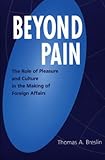
Beyond Pain: The Role of Pleasure and Culture in the Making of Foreign Affairs (Praeger Studies on Ethnic and National Identities in Politics)
02:48 |
Posted by
Unknown
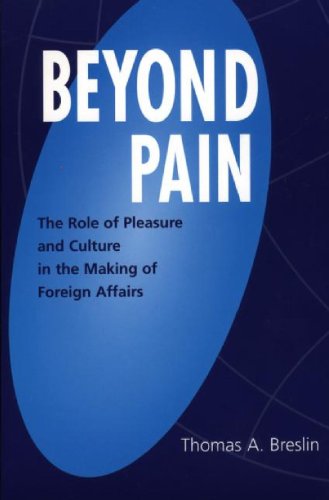
Beyond Pain: The Role of Pleasure and Culture in the Making of Foreign Affairs (Praeger Studies on Ethnic and National Identities in Politics)
Do you buy the product ....
People buy the item below.
Products are as follows.
Click on the image to select the product in stock. Models and colors.
Click on the image to see the price inside.
and see the details inside in image
Can not find the product you want.
Using the scanner or click on the image to the many other products
Product Description Click the product image.
Thank you for using our services and property purchased with us.
Breslin demonstrates that, for two millennia, states in East Asia, Europe, and America have successfully used pleasure to protect themselves and advance their interests, at a small fraction of the cost of militarized policies. Indeed, the Chinese demonstrated that pleasure-based policies primed a stream of highly profitable foreign trade and bolstered the state. Pleasure was feared because it was effective as both an offensive and defensive strategy. The colleens of Ireland and the bibis of India showed how inexorably effective pleasure could be in confounding militarily stronger invaders. In contrast, resorting to violence and pain generally undermined aggressive states. Cultural factors have shaped the choice of pleasures used. Food-centered China has used food, as well as sex and tourism, as tools in its foreign relations. Rome used wine; Byzantium, precious metals, banquets, and public spectacles; Venice, sex, money, and art; England, money and education. America has used sex, money, education, music, and tourism. Breslin's provocative text is based on a wide reading of secondary sources and some primary sources as well as a quarter century of teaching the history of foreign relations. ...Read more |
 |
|
CERTAIN CONTENT THAT APPEARS ON THIS SITE COMES FROM AMAZON SERVICES LLC. THIS CONTENT IS PROVIDED 'AS IS' AND IS SUBJECT TO CHANGE OR REMOVAL AT ANY TIME.