The Navajo Political Experience, Revised Edition (Spectrum Series: Race and Ethnicity in National and Global Politics)
 06:05 |
  Posted by
Unknown
Posted by
Unknown
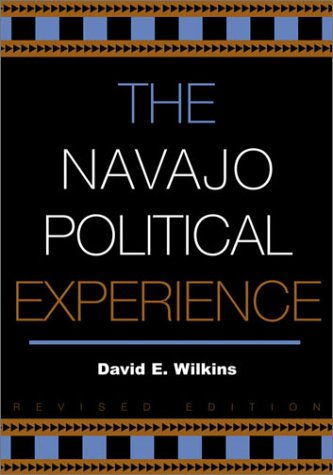

The Navajo Political Experience, Revised Edition (Spectrum Series: Race and Ethnicity in National and Global Politics)
 |
|
 |
|
| The Navajo Nation is the largest of over 560 federally recognized indigenous entities in the United States today. Navajo history and politics thus serve as a model for understanding American Indian issues across the board ranging from the tribal-federal relationship to contemporary land disputes, taxation policies, and Indian gaming challenges. This revised edition of a recent text includes new census data along with a new introduction and an updated timeline of Dine political history. The text's thoroughgoing analysis of Navajo political institutions and processes is amplified by a consideration of the distinctive Navajo culture. Presented in the context of indigenous societies everywhere, the book offers a way to explore the culture of politics and the politics of culture confronted by all native peoples. ...Read
more |
Do you buy the product ....
People buy the item below.
Products are as follows.
Click on the image to select the product in stock. Models and colors.
Click on the image to see the price inside.
and see the details inside in image
Can not find the product you want.
Using the scanner or click on the image to the many other products
Product Description Click the product image.
Thank you for using our services and property purchased with us.
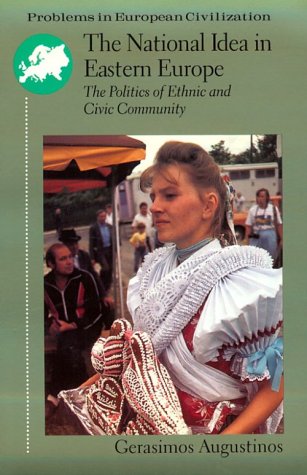
The National Idea in Eastern Europe: The Politics of Ethnic and Civic Community (Problems in European Civilization (DC Heath))
05:19 |
Posted by
Unknown
The National Idea in Eastern Europe: The Politics of Ethnic and Civic Community (Problems in European Civilization (DC Heath))
Do you buy the product ....
People buy the item below.
Products are as follows.
Click on the image to select the product in stock. Models and colors.
Click on the image to see the price inside.
and see the details inside in image
Can not find the product you want.
Using the scanner or click on the image to the many other products
Product Description Click the product image.
Thank you for using our services and property purchased with us.
| This collection analyzes the clash of relatively small nationalities with the great empires of the last two hundred years: the Ottomans, the Habsburgs, Germany, and the Soviet Union. In light of events since 1989, the volume considers the many nationalisms, political, civic, ethnic, to which this region of Europe has given rise. ...Read
more |
 |
|
CERTAIN CONTENT THAT APPEARS ON THIS SITE COMES FROM AMAZON SERVICES LLC. THIS CONTENT IS PROVIDED 'AS IS' AND IS SUBJECT TO CHANGE OR REMOVAL AT ANY TIME.
Ethnic Conflict and International Politics: Explaining Diffusion and Escalation
05:17 |
Posted by
Unknown
 |
Ethnic Conflict and International Politics: Explaining Diffusion and Escalation |
$36.00
|
Ethnic Conflict and International Politics: Explaining Diffusion and Escalation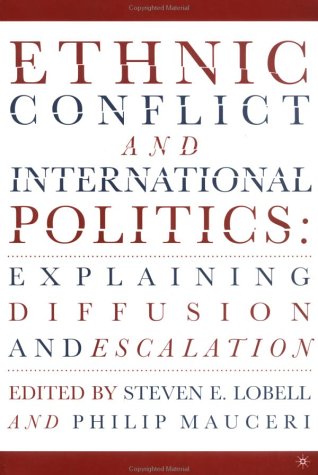
 Ethnic Conflict and International Politics: Explaining Diffusion and Escalation
 Overviews Combining theoretical analyses with case studies, this book increases understanding of the internationalization, diffusion and escalation of ethnic conflict. The essays stand at the nexus of comparative politics and international relations, examining the influence on ethnic conflict of the weakening of state institutional structures, the role of non-state regional and international actors, changes in the ethnic balance of power, and the degree of economic, social, and cultural integration within the regional or global system. The variety of approaches provides useful analytical tools for students, while the diversity of cases from different regions gives the reader a sense of the scope of such problems. |
Do you buy the product ....
People buy the item below.
Products are as follows.
Click on the image to select the product in stock. Models and colors.
Click on the image to see the price inside.
and see the details inside in image
Can not find the product you want.
Using the scanner or click on the image to the many other products
Product Description Click the product image.
Thank you for using our services and property purchased with us.
Images of Christ in Black Politics
13:48 |
Posted by
Unknown
Speaker: Melissa Harris-Lacewell, an associate professor of politics and African American studies at Princeton University Location: Princeton University, Woodrow Wilson School of Public and International Affairs Date: Apr 30, 2008 Melissa Harris-Lacewell is an associate professor of politics and African American studies at Princeton. She received her BA in English from Wake Forest University, her Ph.D. in political science from Duke University and an honorary doctorate from Meadville Lombard Theological School. She is also a student at Union Theological Seminary in New York. Harris-Lacewell is author of "Barbershops, Bibles, and BET: Everyday Talk and Black Political Thought" (Princeton 2004). This text demonstrates how African Americans develop political ideas through ordinary conversations in places like barbershops, churches, and popular culture. The work was awarded the 2005 WEB DuBois book award from the National Conference of Black Political Scientists. It is also the winner of the 2005 Best Book Award from the Race and Ethnic Politics Section of the American Political Science Association. Her academic research has been published in scholarly journals and edited volumes and her interests include the study of African American political thought, black religious ideas and practice, and social and clinical psychology. Harris-Lacewell is at work on a new book "For Colored Girls Who've Considered Politics When Being Strong Wasn't Enough." It is an examination of the ...
PJTV: Are We Doomed? Does Obama's Reelection Signal a Seismic Shift in the American Politics?
10:58 |
Posted by
Unknown
The end is nigh, or is it? NRO Founding Editor Jonah Goldberg and National Review Editor-at-Large John O'Sullivan discuss the implications of Obama's reelection. Was there a shift in the American electorate, or did Romney simply run a poor campaign and snatch defeat from the jaws of victory? Are ethnic and racial politics entering a new phase of increased balkanization? Find out on this Uncommon Knowledge as Peter Robinson reports from sea at the National Review post-election cruise.
Evolutionary Theory and Ethnic Conflict (Praeger Studies on Ethnic and National Identities in Politics)
12:38 |
Posted by
Unknown

Evolutionary Theory and Ethnic Conflict (Praeger Studies on Ethnic and National Identities in Politics)
 |
|
|
|
James and Goetze bring together contributors of varied backgrounds, ranging from evolutionary theorists to game theorists to analysts of specific ethnic conflict. Their work represents a coherent attempt at evaluating the usefulness of evolutionary theories for explaining ethnic phenomena and demonstrates how these theories can be applied in attempts to elucidate real-world behaviors. This study found that kinship theory that posits evolved dispositions to form cooperative bonds with family, ethnic groups and other social groups may go a long way in accounting for the formation of ethnic groups. Also, ingroup-outgroup theory may contribute to understanding how group conflict commences. Likewise, the description of evolved mechanisms for discerning threat, for building reputations, and for recognizing individuals, groups, and states as possible cooperators and long-term allies may facilitate explanation of the outbreak and avoidance of group conflicts. This also may explain the design of conscious strategies for conflict prevention and resolution. Nonetheless, several contributors take a more critical stance and offer ample reason why building these explanations may prove elusive or at least troublesome given the complex character of human societies. This work is a provocative resource for scholars, students, and other researchers involved with ethnicity and ethnic conflict, international relations, social psychology, and social anthropology. ...Read more |
Do you buy the product ....
People buy the item below.
Products are as follows.
Click on the image to select the product in stock. Models and colors.
Click on the image to see the price inside.
and see the details inside in image
Can not find the product you want.
Using the scanner or click on the image to the many other products
Product Description Click the product image.
Thank you for using our services and property purchased with us.
 Labels:
Conflict,
ethnic,
Evolutionary,
Identities,
national,
Politics,
Praeger,
Studies,
Theory
|
Labels:
Conflict,
ethnic,
Evolutionary,
Identities,
national,
Politics,
Praeger,
Studies,
Theory
|
 0
comments
0
comments
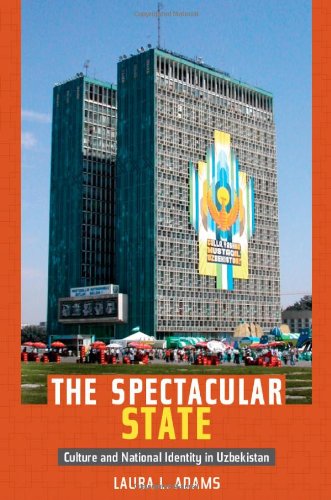
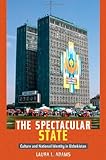
The Spectacular State: Culture and National Identity in Uzbekistan (Politics, History, and Culture)
11:28 |
Posted by
Unknown
The Spectacular State: Culture and National Identity in Uzbekistan (Politics, History, and Culture)
Do you buy the product ....
People buy the item below.
Products are as follows.
Click on the image to select the product in stock. Models and colors.
Click on the image to see the price inside.
and see the details inside in image
Can not find the product you want.
Using the scanner or click on the image to the many other products
Product Description Click the product image.
Thank you for using our services and property purchased with us.
Laura L. Adams offers unique insight into nation building in Central Asia during the post-Soviet era through an exploration of Uzbekistan’s production of national culture in the 1990s. As she explains, after independence the Uzbek government maintained a monopoly over ideology, exploiting the remaining Soviet institutional and cultural legacies. The state expressed national identity through tightly controlled mass spectacles, including theatrical and musical performances. Adams focuses on these events, particularly the massive outdoor concerts the government staged on the two biggest national holidays, Navro’z, the spring equinox celebration, and Independence Day. Her analysis of the content, form, and production of these ceremonies shows how Uzbekistan’s cultural and political elites engaged in a highly directed, largely successful program of nation building through culture. ...Read
more Adams draws on her observations and interviews conducted with artists, intellectuals, and bureaucrats involved in the production of Uzbekistan’s national culture. These elites used globalized cultural forms such as Olympics-style spectacle to showcase local, national, and international aspects of official culture. While these state-sponsored extravaganzas were intended to be displays of Uzbekistan’s ethnic and civic national identity, Adams found that cultural renewal in the decade after Uzbekistan’s independence was not so much a rejection of Soviet power as it was a re-appropriation of Soviet methods of control and ideas about culture. The public sphere became more restricted than it had been in Soviet times, even as Soviet-era ideas about ethnic and national identity paved the way for Uzbekistan to join a more open global community. |
 |
|
CERTAIN CONTENT THAT APPEARS ON THIS SITE COMES FROM AMAZON SERVICES LLC. THIS CONTENT IS PROVIDED 'AS IS' AND IS SUBJECT TO CHANGE OR REMOVAL AT ANY TIME.
Labels:
Culture,
Educational,
History,
Identity,
national,
Organs,
Politics,
Spectacular,
State,
Uzbekistan,
Videos
|
0
comments