
 The National Idea in Eastern Europe: The Politics of Ethnic and Civic Community (Problems in European Civilization (DC Heath))
 05:19 |
  Posted by
Unknown
Posted by
Unknown
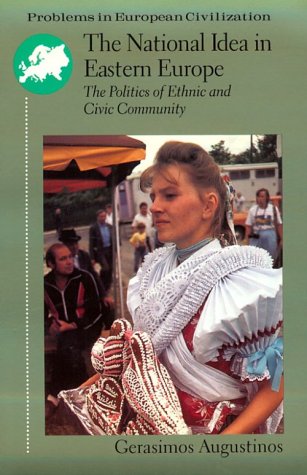

The National Idea in Eastern Europe: The Politics of Ethnic and Civic Community (Problems in European Civilization (DC Heath))
Do you buy the product ....
People buy the item below.
Products are as follows.
Click on the image to select the product in stock. Models and colors.
Click on the image to see the price inside.
and see the details inside in image
Can not find the product you want.
Using the scanner or click on the image to the many other products
Product Description Click the product image.
Thank you for using our services and property purchased with us.
| This collection analyzes the clash of relatively small nationalities with the great empires of the last two hundred years: the Ottomans, the Habsburgs, Germany, and the Soviet Union. In light of events since 1989, the volume considers the many nationalisms, political, civic, ethnic, to which this region of Europe has given rise. ...Read
more |
 |
|
CERTAIN CONTENT THAT APPEARS ON THIS SITE COMES FROM AMAZON SERVICES LLC. THIS CONTENT IS PROVIDED 'AS IS' AND IS SUBJECT TO CHANGE OR REMOVAL AT ANY TIME.
European criminals against the Macedonian nation.
05:42 |
Posted by
Unknown
MHRMI Response To National Post Letter "Canadian Greeks: Don't Rewrite Balkan History" -- OpEd Written by: Eurasia Review January 17, 2012 By Bill Nicholov Why the National Post chose to be "objective" and let the Greek community have equal time in responding to the recent op-ed about Macedonia is beyond me. One should not give the oppressor the opportunity to justify its brutal actions against the oppressed. The vast majority of readers, understandably, have no interest in hearing the long, drawn out version of Greece's romanticized history. Greece is the only country in the Western world to claim that it has no ethnic minorities and proudly proclaims its "ethnic purity". Dangerous statements coming from the self-proclaimed "birthplace of democracy". In their Letters to the Editor, the Consul General of Greece and various Greek organizations referred to the Republic of Macedonia as "FYROM". ("In sharp contrast to Greece's constructive efforts, FYROM Prime Minister Nikola Gruevski..." and "This is what Canadians should consider when they hear the complaints of the FYROM partisans..."). No Macedonian introduces him or herself as being from "FYROM". These statements show readers what the official Greek position is: deny the very existence of a country and an ethnic group. They've taken their directive from the top. Former Greek Prime Minister Constantine Mitsotakis admitted in 1995 that Greece initiated the nonsensical "name dispute" to continue to deny the existence of its ...
European Patriots
12:26 |
Posted by
Unknown
European Patriots
Nigel Farage vs European Union (UKIP)
09:26 |
Posted by
Unknown
United Kingdom Independence Party
Migration, Citizenship and Ethno-National Identities in the European Union (Research in Ethnic Relations Series)
02:16 |
Posted by
Unknown
| Migration, Citizenship and Ethno-National Identities in the European Union (Research in Ethnic Relations Series) |
$130.00
|
|
Migration, Citizenship and Ethno-National Identities in the European Union (Research in Ethnic Relations Series) Migration, Citizenship and Ethno-National Identities in the European Union (Research in Ethnic Relations Series)
 Overviews This text sets out to discuss international migration, ethnic-national identities and citizenship issues, both jointly and severally. |
Do you buy the product ....
People buy the item below.
Products are as follows.
Click on the image to select the product in stock. Models and colors.
Click on the image to see the price inside.
and see the details inside in image
Can not find the product you want.
Using the scanner or click on the image to the many other products
Product Description Click the product image.
Thank you for using our services and property purchased with us.
 Labels:
Citizenship,
ethnic,
EthnoNational,
European,
Identities,
Migration,
Relations,
Research,
Series
|
Labels:
Citizenship,
ethnic,
EthnoNational,
European,
Identities,
Migration,
Relations,
Research,
Series
|
 0
comments
0
comments
Divided Nations and European Integration (National and Ethnic Conflict in the 21st Century)
23:38 |
Posted by
Unknown
Divided Nations and European Integration (National and Ethnic Conflict in the 21st Century)
Do you buy the product ....
People buy the item below.
Products are as follows.
Click on the image to select the product in stock. Models and colors.
Click on the image to see the price inside.
and see the details inside in image
Can not find the product you want.
Using the scanner or click on the image to the many other products
Product Description Click the product image.
Thank you for using our services and property purchased with us.
For ethnic minorities in Europe separated by state borders—such as Basques in France and Spain or Hungarians who reside in Hungary, Slovakia, and Romania—the European Union has offered the hope of reconnection or at least of rendering these divisions less obstructive. Conationals on different sides of European borders may look forward to increased political engagement, including new norms to support the sharing of sovereignty, enhanced international cooperation, more porous borders, and invigorated protections for minority rights. Under the pan-European umbrella, it has been claimed that those belonging to divided nations would no longer have to depend solely on the goodwill of the governments of their states to have their collective rights respected. Yet for many divided nations, the promise of the European Union and other pan-European institutions remains unfulfilled. |
|
|
CERTAIN CONTENT THAT APPEARS ON THIS SITE COMES FROM AMAZON SERVICES LLC. THIS CONTENT IS PROVIDED 'AS IS' AND IS SUBJECT TO CHANGE OR REMOVAL AT ANY TIME.
Silesia and Central European Nationalisms: The Emergence of National and Ethnic Groups in Prussian Silesia and Austrian Silesia (Central European Studies)
02:10 |
Posted by
Unknown
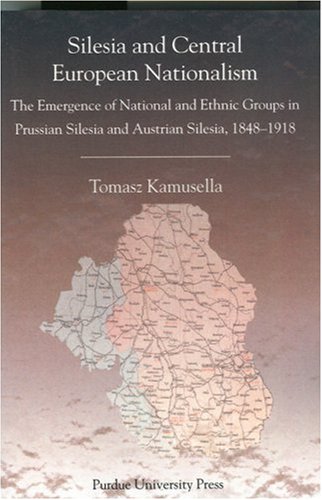
Silesia and Central European Nationalisms: The Emergence of National and Ethnic Groups in Prussian Silesia and Austrian Silesia (Central European Studies)
Do you buy the product ....
People buy the item below.
Products are as follows.
Click on the image to select the product in stock. Models and colors.
Click on the image to see the price inside.
and see the details inside in image
Can not find the product you want.
Using the scanner or click on the image to the many other products
Product Description Click the product image.
Thank you for using our services and property purchased with us.
This book analyzes the problems of nation building in the Central European region of Silesia in 1848 to 1918. The German ethnic model of nation building steeped in language and culture had been replicated in the case of Polish and Czech nationalisms. Silesia became a focal point as an area that was sought after by all three nations. ...Read
more |
 |
|
CERTAIN CONTENT THAT APPEARS ON THIS SITE COMES FROM AMAZON SERVICES LLC. THIS CONTENT IS PROVIDED 'AS IS' AND IS SUBJECT TO CHANGE OR REMOVAL AT ANY TIME.
Labels:
Advent,
Austrian,
Central,
Emergence,
ethnic,
European,
Groups,
Invitations,
national,
Nationalisms,
Prussian,
Silence,
Silesia,
Studies,
Surprising
|
0
comments