
 Small Spirits: Native American Dolls from the National Museum of the American Indian
 05:57 |
  Posted by
Unknown
Posted by
Unknown
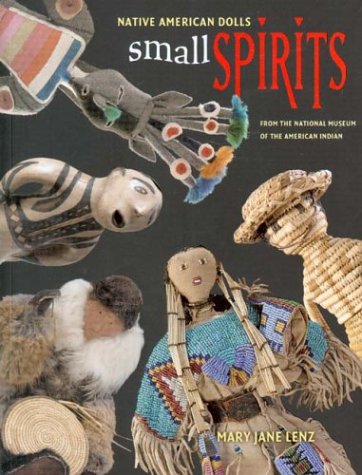

Small Spirits: Native American Dolls from the National Museum of the American Indian
Do you buy the product ....
People buy the item below.
Products are as follows.
Click on the image to select the product in stock. Models and colors.
Click on the image to see the price inside.
and see the details inside in image
Can not find the product you want.
Using the scanner or click on the image to the many other products
Product Description Click the product image.
Thank you for using our services and property purchased with us.
| This book features a dazzling variety of Native American dolls - from prehistoric ceramic figures to striking contemporary creations by Inuit and Pueblo artists - fills the pages of "Small Spirits". These miniature forms have played rich and diverse roles in indigenous cultures from antiquity to the present, serving as toys and learning tools for children, sacred and magical figurines, props and performers in drama and dance, and, in recent years, items manufactured for sale. Some dolls today are created as artworks and coveted by collectors. Stunning full-colour images portray the beauty and craftsmanship of the dolls, from the simplest toy made of sticks and cloth scraps to the exquisitely dressed replica of a woman in her finest regalia. Each offers a glimpse into a particular cultural world - Navajo, Cree, or Tapirape - and into the mind of an individual maker. The great variety of form and materials - such as walrus tusk ivory, cornhusks, and beeswax embellished with the brilliantly coloured feathers of tropical birds - reflects the vibrancy and range of Native American lifeways. Mary Jane Lenz's insightful, authoritative text offers a lively discussion of the intriguing roles that dolls have played in Native American cultures and explores their significance today, while carefully chosen historical photographs bring to life the people who made and used these remarkable creations. ...Read
more |
 |
|
CERTAIN CONTENT THAT APPEARS ON THIS SITE COMES FROM AMAZON SERVICES LLC. THIS CONTENT IS PROVIDED 'AS IS' AND IS SUBJECT TO CHANGE OR REMOVAL AT ANY TIME.
The American 'Ethnic' Food Section
23:28 |
Posted by
Unknown
I spotted this food section in a gourmet grocery store in Alexanderplatz, Berlin and thought it was too good to be true! Whoever curated this section has America down, for better or for worse. Now please excuse me as I eat marshmallow fluff straight from the container. Per my national customs, naturally. Recorded on June 14, 2010 using a Flip Video camcorder.
Indonesia Travel Doc Part 04
22:54 |
Posted by
Unknown
The Republic of Indonesia, is a country in Southeast Asia. Comprising 17508 islands, it is the world's largest archipelagic state. With a population of 222 million people in 2006, it is the world's fourth most populous country and the most populous Muslim-majority nation; however, no reference is made to Islam in the Indonesian constitution. Indonesia is a republic, with an elected legislature and president. The nation's capital city is Jakarta. The country shares land borders with Papua New Guinea, East Timor and Malaysia. Other neighboring countries include Singapore, the Philippines, Australia, and the Indian territory of the Andaman and Nicobar Islands. The Indonesian archipelago has been an important trade region since at least the seventh century, when the Srivijaya Kingdom traded with China and India. Local rulers gradually adopted Indian cultural, religious and political models from the early centuries CE, and Hindu and Buddhist kingdoms flourished. Indonesian history has been influenced by foreign powers drawn to its natural resources. Muslim traders brought Islam, and European powers fought one another to monopolize trade in the Spice Islands of Maluku during the Age of Discovery. Following three and a half centuries of Dutch colonialism, Indonesia secured its independence after World War II. Indonesia's history has since been turbulent, with challenges posed by natural disasters, corruption, separatism, a democratization process, and periods of rapid economic ...
Army Blackhawk Helicopter Lands at South Side Park
03:50 |
Posted by
Unknown
The 9th Police District has had National Night Out every August for several years now -- just not quite like this! 9th Police District Officer Al Garza spent 2 months filing government and military paperwork so that this Blackhawk military helicopter could land at Cornell Square Park at 51st and Wood, where the fair was being held on Tuesday, August 4. I actually had to work the fair this year, handing out free ice cream to several hundred children (and their parents) who had seemingly been fasting for the previous week, but I wasn't about to miss shooting video of this. After it landed, with amazingly little backwash, the crew gave tours of the copter for an hour-and-a-half. The neighborhoods surrounding Cornell Square Park are mostly poor and working-class, and these National Nights Out are attended by a melting pot of just about every ethnic group imaginable - this was probably the first time some of these kids or their parents had been near or in any kind of aircraft, either on the ground or aloft. An exciting evening all around. The dialogue toward the end is courtesy of my very enthusiastic neighbor, Mrs. Allison;-) Part Two -- the takeoff -- is coming soon to a YouTube screen near you. See it at www.youtube.com
PJTV: Are We Doomed? Does Obama's Reelection Signal a Seismic Shift in the American Politics?
10:58 |
Posted by
Unknown
The end is nigh, or is it? NRO Founding Editor Jonah Goldberg and National Review Editor-at-Large John O'Sullivan discuss the implications of Obama's reelection. Was there a shift in the American electorate, or did Romney simply run a poor campaign and snatch defeat from the jaws of victory? Are ethnic and racial politics entering a new phase of increased balkanization? Find out on this Uncommon Knowledge as Peter Robinson reports from sea at the National Review post-election cruise.
Moroccan Vocalist, Karima Skalli, American Musicians and Cultural Exchange
07:34 |
Posted by
Unknown
Moroccan Vocalist Karima Skalli who performs both Classical Arabic titles such as esmahan, farid al attrach, oum khaltoum, fairouz and others and Moroccan Andalusian songs has been performing in the US with the Multicultural Mesto. Orchestra. The orchestra is comprised of American professional musicians with diverse ethnic backgrounds who are able to perform Arabic and other Middle Eastern Music thanks to compositions by maestro Nabil Azzam who has made it possible for musicians who have not grown up with the music to be able to perform the music in such a high level. In this documentary, Karima Skalli speaks about the Mesto orchestra and performs a classical Oum Kalthoum song at the Detroit Max Fisher Music center for the Arab American National Museum Gala.
Meeting With American Indians Is Wrong, Says RNC Leader
21:56 |
Posted by
Unknown
"General George Armstrong Custer died in 1876, but that doesn't mean we should forget his legacy of slaughtering indigenous peoples. That's why Republican National Committee leader and GOP lobbyist Pat Rogers has condemned New Mexico governor Susana Martinez for meeting with American Indians...".* The Young Turks host Cenk Uygur shares his thoughts. *Read more here from Louis Peitzman in Gawker: gawker.com Support The Young Turks by Subscribing bit.ly Like Us on Facebook: www.fb.com Follow Us on Twitter: bit.ly Buy TYT Merch: theyoungturks.spreadshirt.com Find out how to watch The Young Turks on Current by clicking here: www.current.com
Moroccan Vocalist, American Musicians, Arabic Music and Cultural Exchange
04:32 |
Posted by
Unknown
Moroccan Vocalist Karima Skalli who performs both Classical Arabic titles such as esmahan, farid al attrach, oum khaltoum, fairouz and others and Moroccan Andalusian songs has been performing in the US with the Multicultural Mesto. Orchestra. The orchestra is comprised of American professional musicians with diverse ethnic backgrounds who are able to perform Arabic and other Middle Eastern Music thanks to compositions by maestro Nabil Azzam who has made it possible for musicians who have not grown up with the music to be able to perform the music in such a high level. In this documentary, Karima Skalli speaks about the Mesto orchestra and performs a classical Oum Kalthoum song at the Detroit Max Fisher Music center for the Arab American National Museum Gala.
Long-Neck- Giraffe Women of Thailand
15:14 |
Posted by
Unknown
A long rugged jeep ride to the border of Northern Thailand brings you to a world that will soon be gone. In 2001, The Karen, or Kayan group of ethnic minorities from Myamar (Burma) are caught in this simple refugee village, yet keep their dignity ... A kaleidoscope of color combines these basic surroundings with strikingly dressed women selling crafts to picture taking, gawking tourists. We had mixed feelings about going, afraid of it being a zoo...but what we found were gentle, lovely souls, educated and with a great nature, and amazing physical beauty. In recent years, it seems that organizations are trying to help them relocate, and live normal lives...freeing themselves of the money making Neck Coils that both deform and exploit them.
Do All Indians Live in Tipis?: Questions and Answers from the National Museum of the American Indian
09:10 |
Posted by
Unknown


Do All Indians Live in Tipis?: Questions and Answers from the National Museum of the American Indian
 |
|
|
|
If you've ever wondered about where Native Americans came from, whether they really used smoke signals, or if they wore socks, this book has the answers. From clothing, food, origins, ceremonies, and language to love, marriage, art, music, and casinos, DO ALL INDIANS LIVE IN TIPIS? debunks widespread stereotypes and answers all of the most common questions about Native Americans. Accessible and enlightening, this is the perfect introduction to Native American history and contemporary culture. ...Read more |
Do you buy the product ....
People buy the item below.
Products are as follows.
Click on the image to select the product in stock. Models and colors.
Click on the image to see the price inside.
and see the details inside in image
Can not find the product you want.
Using the scanner or click on the image to the many other products
Product Description Click the product image.
Thank you for using our services and property purchased with us.
From Dessalines to Duvalier: Race, Colour and National Independence in Haiti
07:19 |
Posted by
Unknown

From Dessalines to Duvalier: Race, Colour and National Independence in Haiti
Do you buy the product ....
People buy the item below.
Products are as follows.
Click on the image to select the product in stock. Models and colors.
Click on the image to see the price inside.
and see the details inside in image
Can not find the product you want.
Using the scanner or click on the image to the many other products
Product Description Click the product image.
Thank you for using our services and property purchased with us.
| "Rich in subject matter and eminently readable, this book is also a fine work of scholarship. The more than 1,200 footnotes are models of clarity and relevance; the bibliography and index seem scrupulously accurate. . . While each generation must rewrite its own history, as Nicholls remarks, no book on Haiti for a long time to come will properly be able to ignore the analysis he here provides." --Ethnic and Racial Studies "Step by step, [Nicholls] guides us through the various historical time periods of Haitian political and national development, illuminating each one of them by a cogent and learned discussion of the main ideas and ideologies that accompanied them." --The Political Quarterly "Probably the best book written about Haitian history after its independence . . . a thorough, thoughtful, extremely well-researched work." --Handbook of Latin American Studies In this lively, provocative, and well-documented history, David Nicholls discusses the impact of "color" on political and social alliances during almost two hundred years of Haitian history. While consciousness of racial identity has been a powerful factor which, from the earliest days, has united Haitians in a determination to preserve their national independence, color has been a divisive factor, leading to the erosion of the stability of that independence. Nicholls grounds this sophisticated analysis in great historical detail and engaging, witty prose. Students and general readers alike will gain much from this insightful and informative history of Haiti. A new preface to this edition covers the last ten years in Haitiain history. David Nicholls is a major authority on Haiti, and was in the country as a newspaper correspondent during the 1987 election disaster. His other books include Haiti in the Caribbean Context: Ethnicity; The Pluralist State: and Deity and Domination. ...Read
more |
 |
|
CERTAIN CONTENT THAT APPEARS ON THIS SITE COMES FROM AMAZON SERVICES LLC. THIS CONTENT IS PROVIDED 'AS IS' AND IS SUBJECT TO CHANGE OR REMOVAL AT ANY TIME.
 Labels:
19502000,
American,
Century,
Colour,
Culture,
Dessalines,
Duvalier,
Independence,
national
|
Labels:
19502000,
American,
Century,
Colour,
Culture,
Dessalines,
Duvalier,
Independence,
national
|
 0
comments
0
comments
American Soul: The DuSable Museum of African-American History
05:08 |
Posted by
Unknown
Founded in 1961, the DuSable is one of the first African-American museums in the US It follows African-American history from its beginning on the shores of Africa to a celebration of African-American achievements including those of Bessie Coleman, the nations first black female aviator; World War II Tuskegee airmen; Major Robert Lawrence, the nation's first black astronaut; and Harold Washington, Chicagos first black mayor. The museum is dedicated to the collection, preservation, interpretation, and dissemination of the history and culture of Africans and Americans of African descent. Weaving themes of art, history, and diversity, it also tells us Whats American about Americans? and What Shall I Tell My Children who are Black? For more information, visit greatmuseums.org.
People of Aleppo Take to the Streets: We Want FSA OUT!!! We Want Syrian Army
11:12 |
Posted by
Unknown
The residents of Aleppo apparently have had enough of the "Free Syrian Army" (FSA) [aka Western-backed "freedom fighters"]. They took to the streets of Aleppo in a big protest that started from al-Sabeel neighborhood. The protest included all walks of life. What united all these people was one message: "We want FSA out! We want the Syrian Army". This sentiment is not confined to the residents of Aleppo but is also a reflection of a large segment of Syria's population that extends from its north to its south. During a recent football (soccer) match in Kuwait between the Syrian national team and its Jordanian counterpart, one "Syrian" supporter in the crowd carried the tri-star French mandate flag of the FSA, and he was vociferously kicked out by the Syrians, an act that shows how most Syrians actually despise all FSA supporters.
Labels:
Aleppo,
American,
Artist,
Collections,
Frozen,
Image,
Inspirations,
Kimble,
Landauer,
OUT,
People,
Photography,
Scandinavian,
Series,
Signature,
Streets,
Syrian,
Warren
|
0
comments
Making Ethnic Choices: California's Punjabi Mexican Americans (Asian American History & Cultu)
10:56 |
Posted by
Unknown
 |
[else] [endif] |
 |
|
| This is a study of the flexibility of ethnic identity. In the early twentieth century, men from India's Punjab province came to California to work on the land. The new immigrants had few chances to marry. There were very few marriageable Indian women, and miscegenation laws and racial prejudice limited their ability to find white Americans. Discovering an unexpected compatibility, Punjabis married women of Mexican descent and these alliances inspired others as the men introduced their bachelor friends to the sisters and friends of their wives. These biethnic families developed an identity as "Hindus" but also as Americans. Karen Leonard has related theories linking state policies and ethnicity to those applied at the level of marriage and family life. Using written sources and numerous interviews, she invokes gender, generation, class, religion, language, and the dramatic political changes of the 1940s in South Asia and the United States to show how individual and group perceptions of ethnic identity have changed among Punjabi Mexican Americans in rural California. Karen Isaksen Leonard is Professor of Anthropology at the University of California, Irvine. ...Read
more |
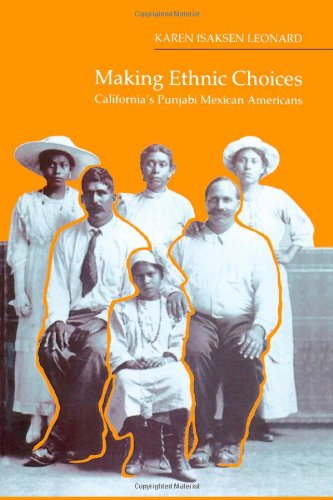
Making Ethnic Choices: California's Punjabi Mexican Americans (Asian American History & Cultu)
Do you buy the product ....
People buy the item below.
Products are as follows.
Click on the image to select the product in stock. Models and colors.
Click on the image to see the price inside.
and see the details inside in image
Can not find the product you want.
Using the scanner or click on the image to the many other products
Product Description Click the product image.
Thank you for using our services and property purchased with us.
CERTAIN CONTENT THAT APPEARS ON THIS SITE COMES FROM AMAZON SERVICES LLC. THIS CONTENT IS PROVIDED 'AS IS' AND IS SUBJECT TO CHANGE OR REMOVAL AT ANY TIME.
National Abjection: The Asian American Body Onstage
06:02 |
Posted by
Unknown
 |
[else] [endif] |
|
|
National Abjection explores the vexed relationship between "Asian Americanness" and "Americanness” through a focus on drama and performance art. Karen Shimakawa argues that the forms of Asian Americanness that appear in U.S. culture are a function of national abjection—a process that demands that Americanness be defined by the exclusion of Asian Americans, who are either cast as symbolic foreigners incapable of integration or Americanization or distorted into an “honorary” whiteness. She examines how Asian Americans become culturally visible on and off stage, revealing the ways Asian American theater companies and artists respond to the cultural implications of this abjection. ...Read
more Shimakawa looks at the origins of Asian American theater, particularly through the memories of some of its pioneers. Her examination of the emergence of Asian American theater companies illuminates their strategies for countering the stereotypes of Asian Americans and the lack of visibility of Asian American performers within the theater world. She shows how some plays—Wakako Yamauchi’s 12-1-A, Frank Chin’s Chickencoop Chinaman, and The Year of the Dragon—have both directly and indirectly addressed the displacement of Asian Americans. She analyzes works attempting to negate the process of abjection—such as the 1988 Broadway production of M. Butterfly as well as Miss Saigon, a mainstream production that enacted the process of cultural displacement both onstage and off. Finally, Shimakawa considers Asian Americanness in the context of globalization by meditating on the work of Ping Chong, particularly his East-West Quartet. National Abjection will appeal to those in Asian American, American, performance, and cultural studies. |
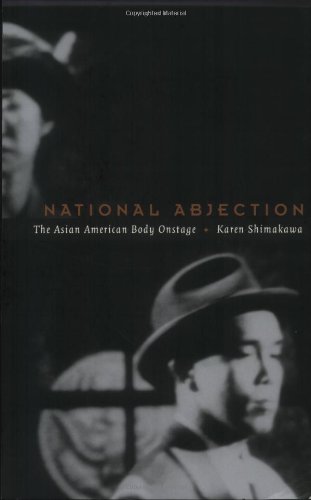
National Abjection: The Asian American Body Onstage
Do you buy the product ....
People buy the item below.
Products are as follows.
Click on the image to select the product in stock. Models and colors.
Click on the image to see the price inside.
and see the details inside in image
Can not find the product you want.
Using the scanner or click on the image to the many other products
Product Description Click the product image.
Thank you for using our services and property purchased with us.
CERTAIN CONTENT THAT APPEARS ON THIS SITE COMES FROM AMAZON SERVICES LLC. THIS CONTENT IS PROVIDED 'AS IS' AND IS SUBJECT TO CHANGE OR REMOVAL AT ANY TIME.
American Indians and National Parks
05:44 |
Posted by
Unknown
 |
American Indians and National Parks |
$24.95
|
American Indians and National Parks
 American Indians and National Parks
 Overviews Many national parks and monuments tell unique stories of the struggle between the rights of native peoples and the wants of the dominant society. These stories involve our greatest parks—Yosemite, Yellowstone, Mesa Verde, Glacier, the Grand Canyon, Olympic, Everglades—as well as less celebrated parks elsewhere. In American Indians and National Parks, authors Robert Keller and Michael Turek relate these untold tales of conflict and collaboration. American Indians and National Parks details specific relationships between native peoples and national parks, including land claims, hunting rights, craft sales, cultural interpretation, sacred sites, disposition of cultural artifacts, entrance fees, dams, tourism promotion, water rights, and assistance to tribal parks. Beginning with a historical account of Yosemite and Yellowstone, American Indians and National Parks reveals how the creation of the two oldest parks affected native peoples and set a pattern for the century to follow. Keller and Turek examine the evolution of federal policies toward land preservation and explore provocative issues surrounding park/Indian relations. When has the National Park Service changed its policies and attitudes toward Indian tribes, and why? How have environmental organizations reacted when native demands, such as those of the Havasupai over land claims in the Grand Canyon, seem to threaten a national park? How has the Park Service dealt with native claims to hunting and fishing rights in Glacier, Olympic, and the Everglades? While investigating such questions, the authors traveled extensively in national parks and conducted over 200 interviews with Native Americans, environmentalists, park rangers, and politicians. They meticulously researched materials in archives and libraries, assembling a rich collection of case studies ranging from the 19th century to the present. In American Indians and National Parks, Keller and Turek tackle a significant and complicated subject for the first time, presenting a balanced and detailed account of the Native-American/national-park drama. This book will prove to be an invaluable resource for policymakers, conservationists, historians, park visitors, and others who are concerned about preserving both cultural and natural resources. |
Do you buy the product ....
People buy the item below.
Products are as follows.
Click on the image to select the product in stock. Models and colors.
Click on the image to see the price inside.
and see the details inside in image
Can not find the product you want.
Using the scanner or click on the image to the many other products
Product Description Click the product image.
Thank you for using our services and property purchased with us.
The National Museum of the American Indian: Critical Conversations
03:18 |
Posted by
Unknown
 |
[else] [endif] |
|
|
The first American national museum designed and run by indigenous peoples, the Smithsonian Institution’s National Museum of the American Indian in Washington DC opened in 2004. It represents both the United States as a singular nation and the myriad indigenous nations within its borders. Constructed with materials closely connected to Native communities across the continent, the museum contains more than 800,000 objects and three permanent galleries and routinely holds workshops and seminar series. This first comprehensive look at the National Museum of the American Indian encompasses a variety of perspectives, including those of Natives and non-Natives, museum employees, and outside scholars across disciplines such as cultural studies and criticism, art history, history, museum studies, anthropology, ethnic studies, and Native American studies. The contributors engage in critical dialogues about key aspects of the museum’s origin, exhibits, significance, and the relationship between Native Americans and other related museums. |
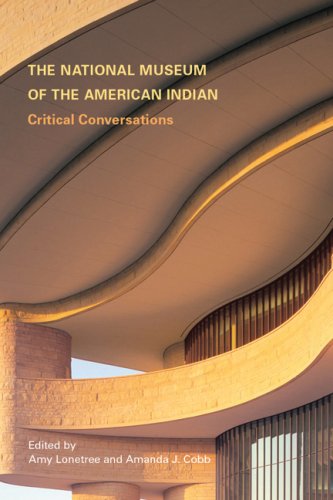
The National Museum of the American Indian: Critical Conversations
Do you buy the product ....
People buy the item below.
Products are as follows.
Click on the image to select the product in stock. Models and colors.
Click on the image to see the price inside.
and see the details inside in image
Can not find the product you want.
Using the scanner or click on the image to the many other products
Product Description Click the product image.
Thank you for using our services and property purchased with us.
CERTAIN CONTENT THAT APPEARS ON THIS SITE COMES FROM AMAZON SERVICES LLC. THIS CONTENT IS PROVIDED 'AS IS' AND IS SUBJECT TO CHANGE OR REMOVAL AT ANY TIME.
Labels:
Aesthetics,
American,
Antique,
Conversations,
Critical,
Decorative,
Design,
Edition,
Effects,
Indian,
Lighting,
Museum,
national,
Practical
|
0
comments